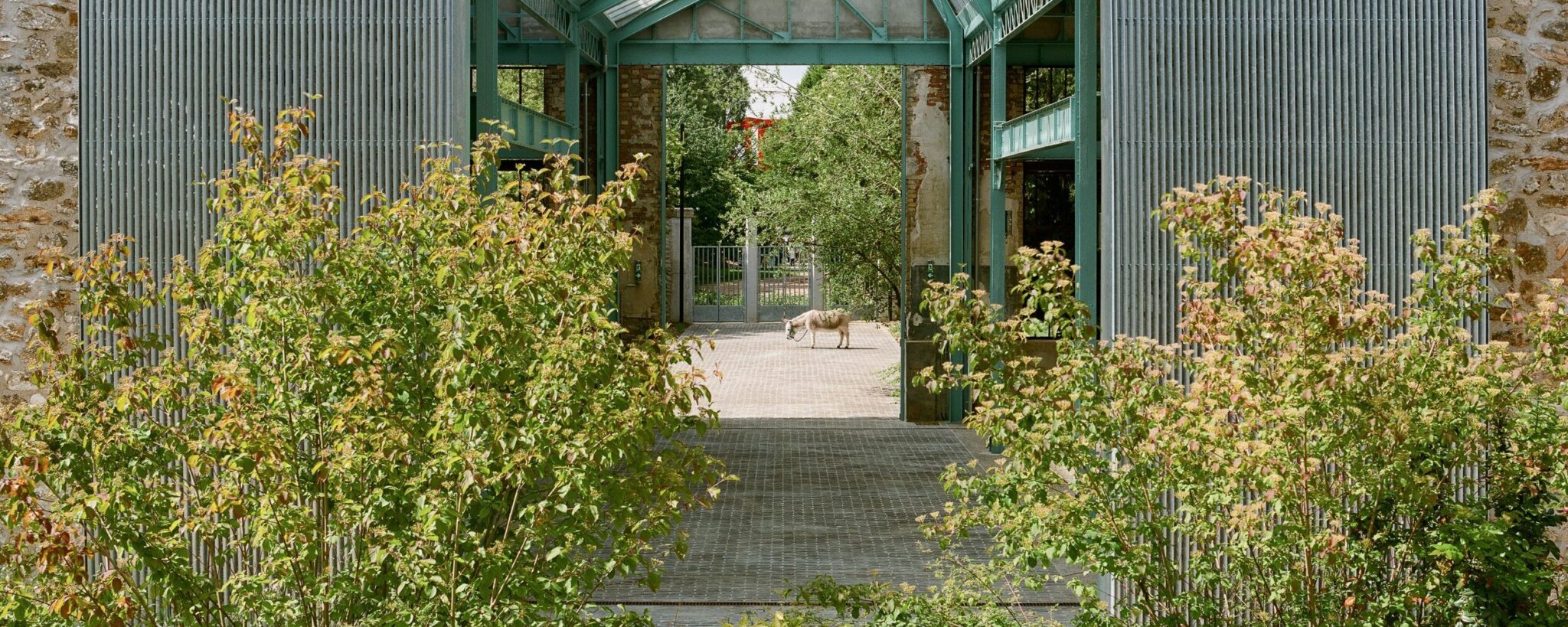

In 2023, part of La Villette’s teams moved into the Pavillon Jardins, a new eco-responsible building, while the first section of the farm was inaugurated. At the same time, the renovation works of the Halle de Rouvray began, which will become the central hub of the Ferme de la Villette and the Jardins Passagers.
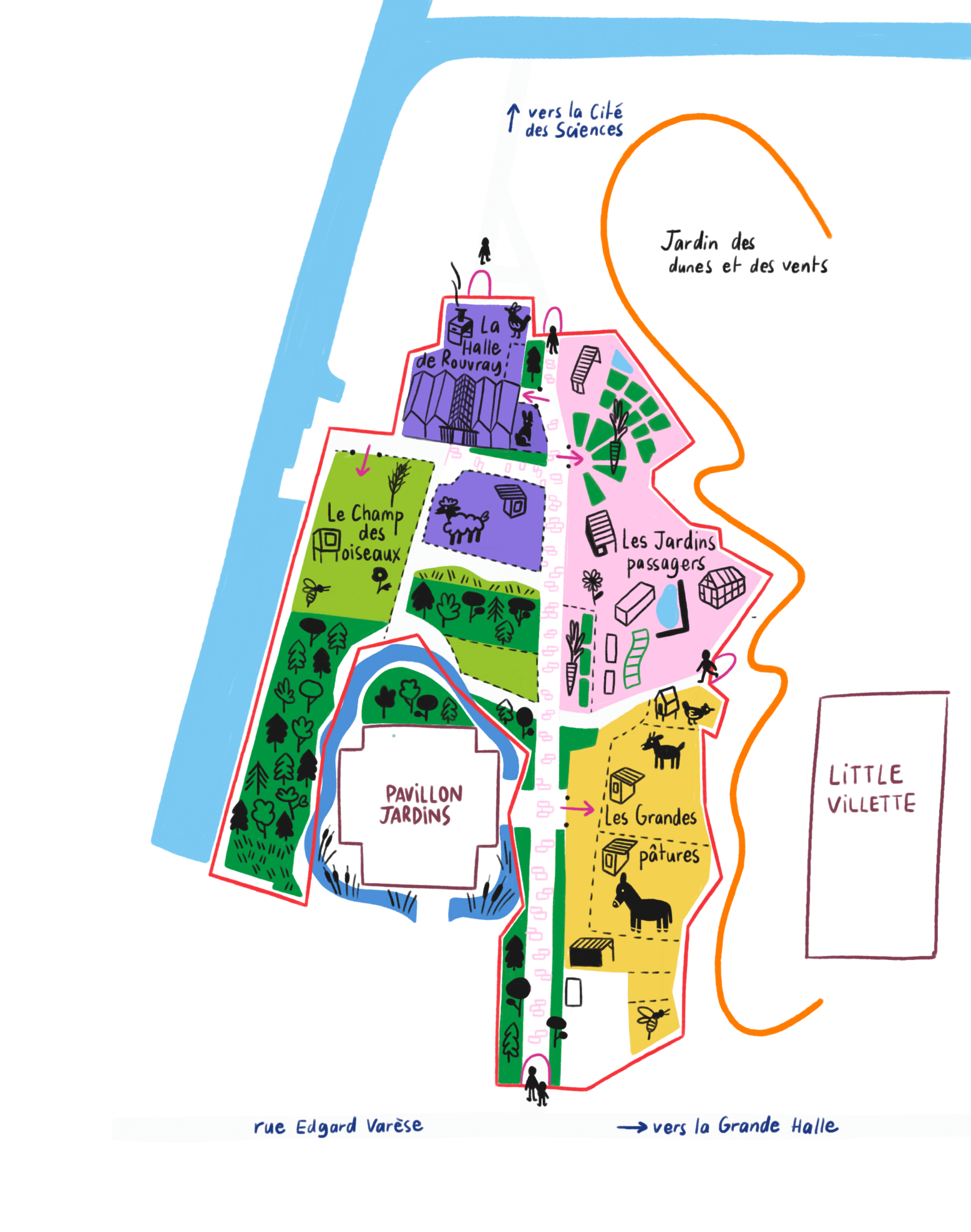
15,000 m² dedicated to raising awareness of living ecosystems and biodiversity
Over the weekend of 28–29 March 2026, La Villette will inaugurate a new promenade linking the Canal de l’Ourcq and the Conservatoire National Supérieur de Musique et de Danse de Paris, as well as the four main spaces of the farm and gardens:
• La Halle de Rouvray, an industrial hall that has been renovated to become the main built structure of the farm,
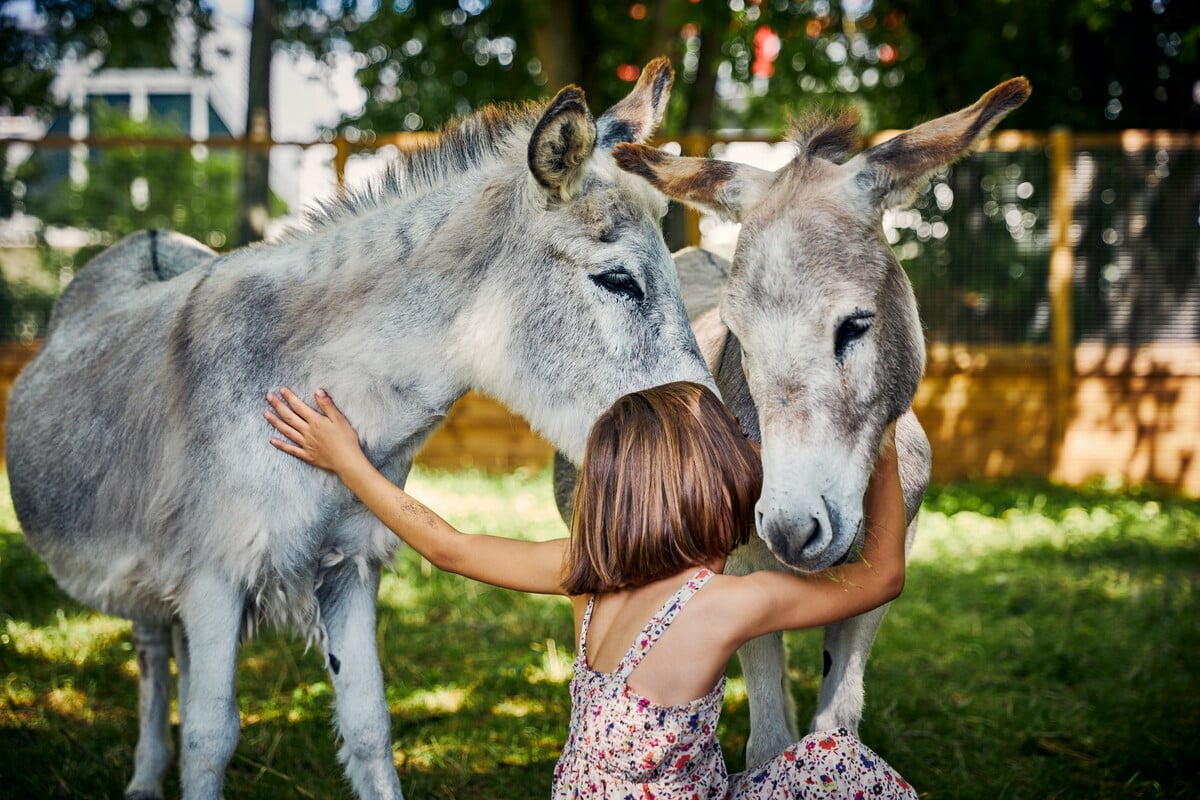
• Les Grandes Pâtures, home to the farm’s animals and a space dedicated to raising awareness of their way of life,
• Les Jardins Passagers, ecological gardens with cultural, educational and social purposes,
• Le Champ des Oiseaux, a refuge habitat organised around a wheat field, a wildflower meadow and a wooded area.

HALLE DE ROUVRAY
Renovation of an industrial hall
The Halle de Rouvray, built in 1914 and later modified in 1934, served as a metalworking and carpentry workshop for the Canal Service until 1994. Now part of the Parc de la Villette, it has been fully renovated by the architectural firm CARRIERE DIDIER GAZEAU.
A witness to the site’s industrial past, the renovated hall now hosts the activities of the Jardins Passagers and the Ferme de la Villette. The project is based on three objectives: reconnecting the building with the park, ensuring its long-term sustainability, and preserving its original character. Opening the structure to the surrounding natural environment and creating a central axis running through the building strengthen the connections between the hall, the park and the canal.
In a very deteriorated state (aged roofing, corroded structures, polluted soil and damaged masonry), the building required extensive renovation work. The interventions deliberately preserved the roughness of the materials: bricks and repairs remain visible as a reminder of the site’s history. A reuse approach also allowed bricks and tiles to be repurposed on site for the new fence.
Designed as a place for sharing and exchange, the Farm covers 1,000 m²: 550 m² inside the hall (workshops, a flexible space and animal housing) and 450 m² of outdoor courtyard (chicken coop, relaxation area and bread oven). It offers workshops and educational activities that introduce visitors to the cycle of living ecosystems and promote respect for animal welfare.

JARDINS PASSAGERS
An extension to the educational programme
Les Jardins Passagers are ecological gardens with cultural, educational and social purposes. Created 25 years ago and inspired by the philosophy of the gardener and landscape designer Gilles Clément, they have introduced several generations of children to environmental awareness.
The extension project aims to broaden the range of educational activities by creating:
• a hands-on gardening area planted directly in the ground, including a vegetable garden inspired by market-garden growing beds and based on natural gardening techniques,
• a greenhouse where young plants can be sown with children during workshops and later replanted throughout the gardens,
• an educational space dedicated to composting,
• a sensory pathway designed for visitors with disabilities, centred around the five senses,
• a dye plants garden featuring a collection of plants used in natural dyeing workshops.

CHAMP DES OISEAUX
A new refuge for biodiversity and knowledge sharing
The wasteland on the western side of the Parc de la Villette, formerly reserved for La Villette staff, will become a space for sharing and learning dedicated to living ecosystems. Workshops, observation sessions and educational activities will be offered throughout the year, while certain sensitive areas, such as the woodland and forest edge, will remain exceptionally accessible in order to preserve biodiversity.
The redevelopment project also protects the darse du fond de Rouvray, which has become a remarkable ecosystem where birds and spontaneous vegetation coexist along the canal.
The Champ des Oiseaux, designed as a place of calm for both humans and non-humans, will include:
• a field of heritage wheat varieties (300 m²) used for workshops on seeds, soil and bread-making,
• a clearing and wild meadow encouraging pollinators and biodiversity, with a future observation point,
• a forest edge and an urban woodland, providing shade and habitat for wildlife,
• a landscaped swale collecting rainwater and creating a wet habitat favourable to wildlife.
With the support of Fondation Adrienne et Pierre Sommer, Grand Mécène
And the support of