
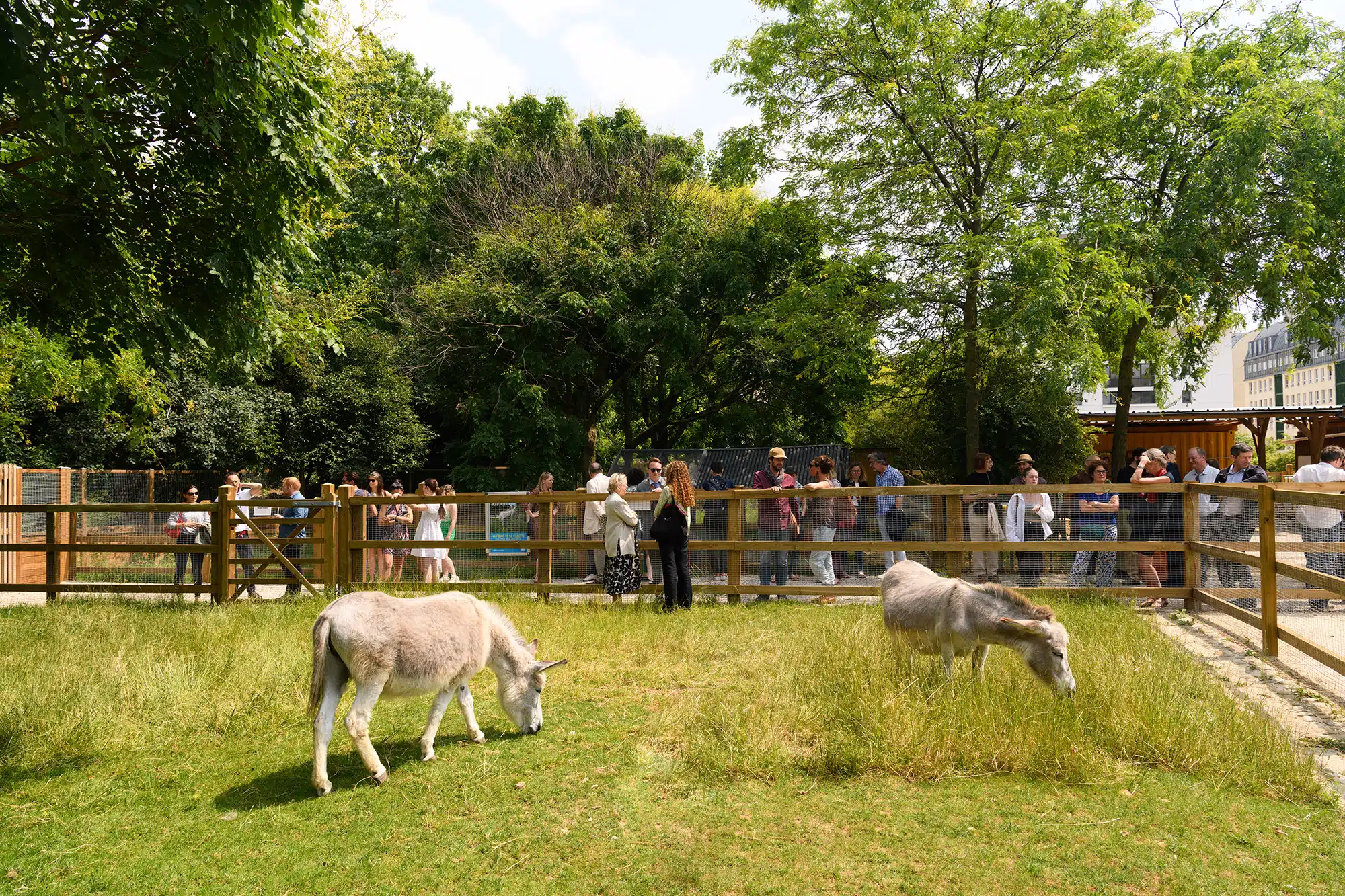
Between Little Villette and the Jardins Passagers, an educational farm opened in July 2023 thanks to the support of the Adrienne and Pierre Sommer Foundation. A collection of pastures, wooden structures, enclosures, and cabins has been designed to host the residents of La Ferme de la Villette.
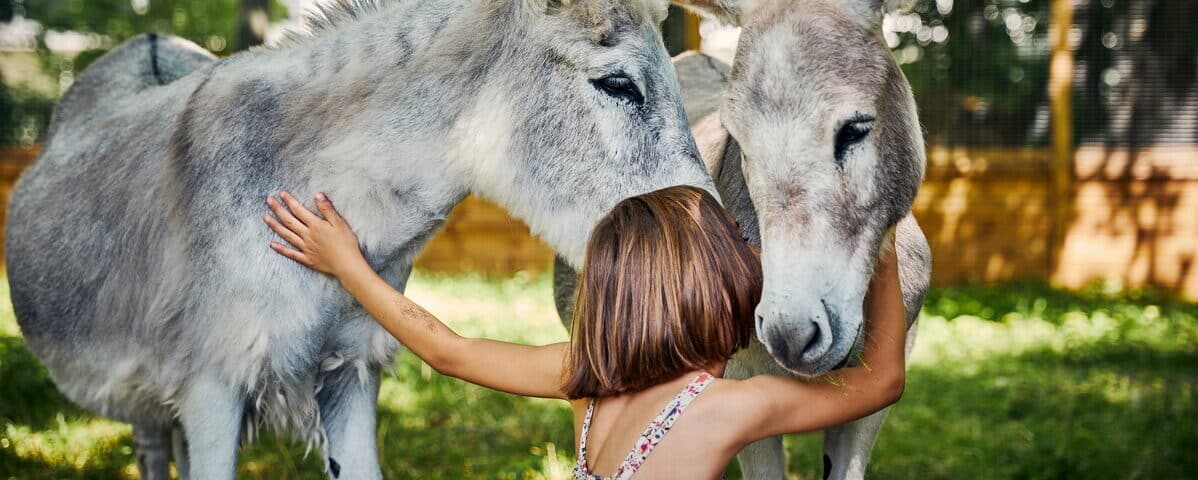
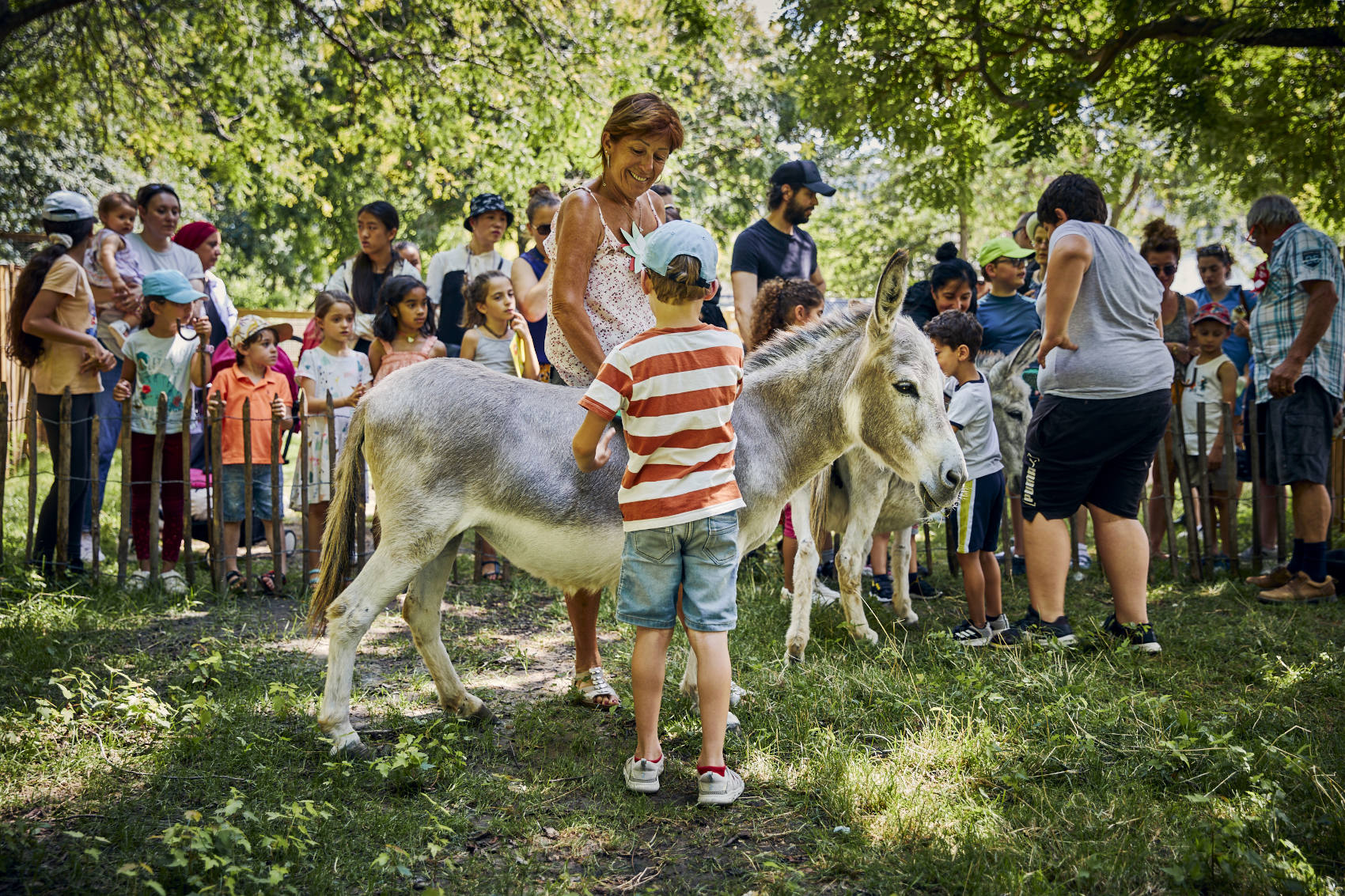
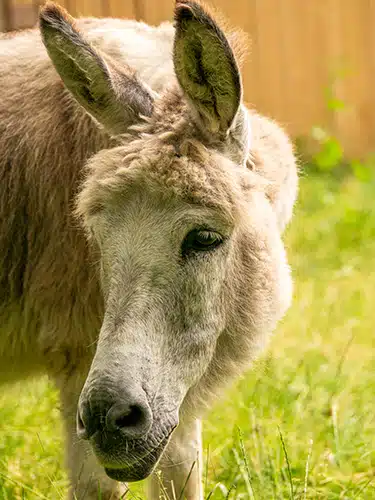
You can meet two Sardinian donkeys named Quoquine and Lerminette, aged 19 and 24 at their arrival in 2023, who have come to spend their retirement in Paris. Additionally, three generations of “chèvres des fossés” (Prune the grandmother, Olive the mother, Ula and Utopie the granddaughters) are also there. Not to mention the chickens and rabbits.
The farm of la Villette is a certified accessible Tourisme et Handicap site.

Join the Farmer’s Mornings
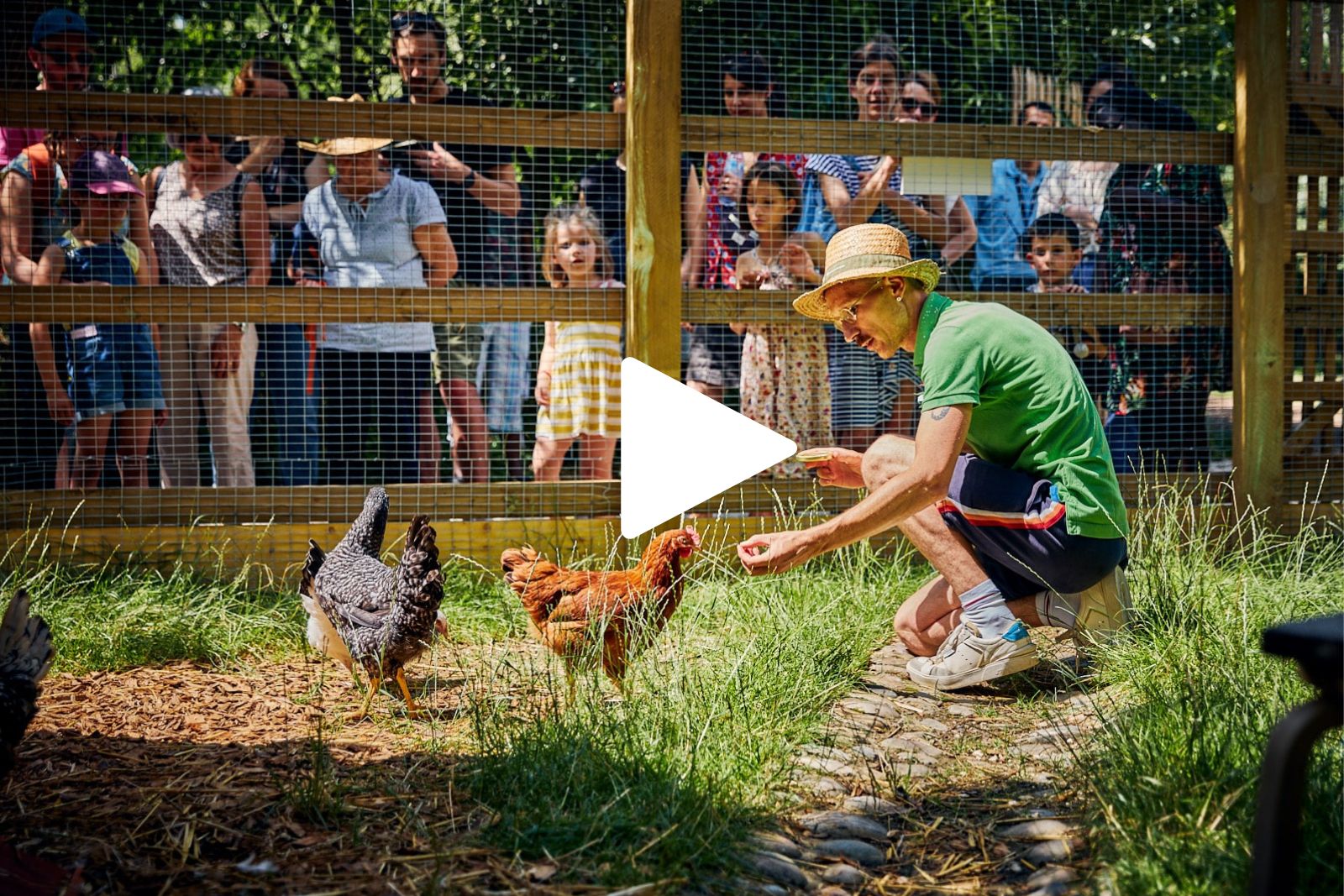
La Ferme de la Villette, a privileged place for discovering and strengthening the bonds between city dwellers and animals. Similar to the “Jardins passagers,” workshops are offered where you can meet the farm residents, understand their way of life, and participate in their care.
Every weekend, alongside a farmer, feed the animals, brush them, and change their bedding… Donkeys, goats, chickens, and rabbits will no longer hold any secrets for you.
Ages 3-10 • Duration 1h30
Workshop for parent-child pairs | PT €22 • AA €16
Please wear appropriate clothing for farm work (long pants and closed-toe shoes).
Adult workshops
On weekends, La Villette offers hands-on outdoor workshops for adults. At La Ferme de la Villette, discover the basics of beekeeping and learn about the vital role bees play in the ecosystem. At the Jardins Passagers, explore the principles of ecological gardening, grow your own plants, and try out environmentally friendly techniques. These workshops are a unique opportunity to reconnect with nature and deepen your knowledge in inspiring and enriching settings.
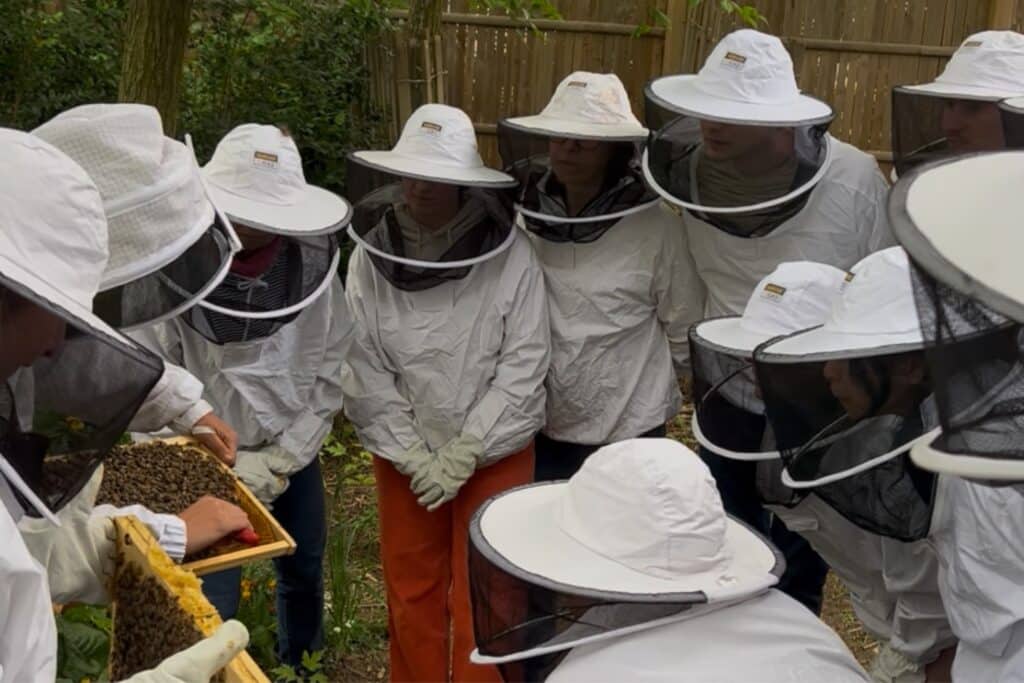
Les Ruches Villette
Installed since 2020 in the Jardins Passagers of Parc de La Villette, les Ruches Villette are an urban beekeeping project led by beekeeper Pierre Merlet. They contribute to the preservation of bees and local biodiversity. The bees collect nectar from the park’s flowers to produce Miel Villette, a local honey available for sale. Educational workshops offer insights into sustainable beekeeping and raise awareness among children and adults about the importance of pollinators.
With the support of


The Villette Farm is expanding!
La Villette continues its commitment to biodiversity preservation by expanding the Villette Farm to:
- Open new green spaces to the public
- Provide more pastures for the animals
- Strengthen the educational offerings
See you in spring 2026!
With the support of

Practical information
Construction works: access changes until Friday, March 27, 2026
The entrance has currently been relocated to the rear of the Ferme de la Villette (behind Little Villette, near the rabbit enclosure).
La Ferme de la Villette is open:
Saturdays and Sundays, from 2:30 pm to 5:30 pm, from 28 February to 22 March 2026.
The new pedestrian promenade of the Ferme de la Villette will be open: Saturdays and Sundays, from 8:00 am to 8:00 pm, starting 28 March 2026.
La Halle de Rouvray, the Grandes pâtures and the Jardins passagers will be open: Saturdays and Sundays, from 3:00 pm to 7:00 pm, from 28 March to 1 November 2026.
Winter closure: from November to February
On site, find a presentation of the animals by the farm team throughout the afternoon, a playful and sensory area, a discovery booklet for young audiences…
Last entry: 15 min before closing
Free • All audiences
During the week, La Ferme is open by reservation for groups.
Group Reservations: +33 (0)1 40 03 74 82 — Monday to Friday, 2:30 p.m. to 5:30 p.m.
Contact: resagroupes@villette.com
How to get there?
Metro 5: stop at Porte de Pantin
Bus 75, 151: stop at Porte de Pantin
Tramway 3b: stop at Porte de Pantin or Porte de la Villette
Accessibility
La Ferme de la Villette is accessible to people with reduced mobility.
The farm of la Villette is a certified accessible “Tourisme et Handicap” site.
With the support of Fondation Adrienne et Pierre Sommer
The residents of the farm:
The donkeys
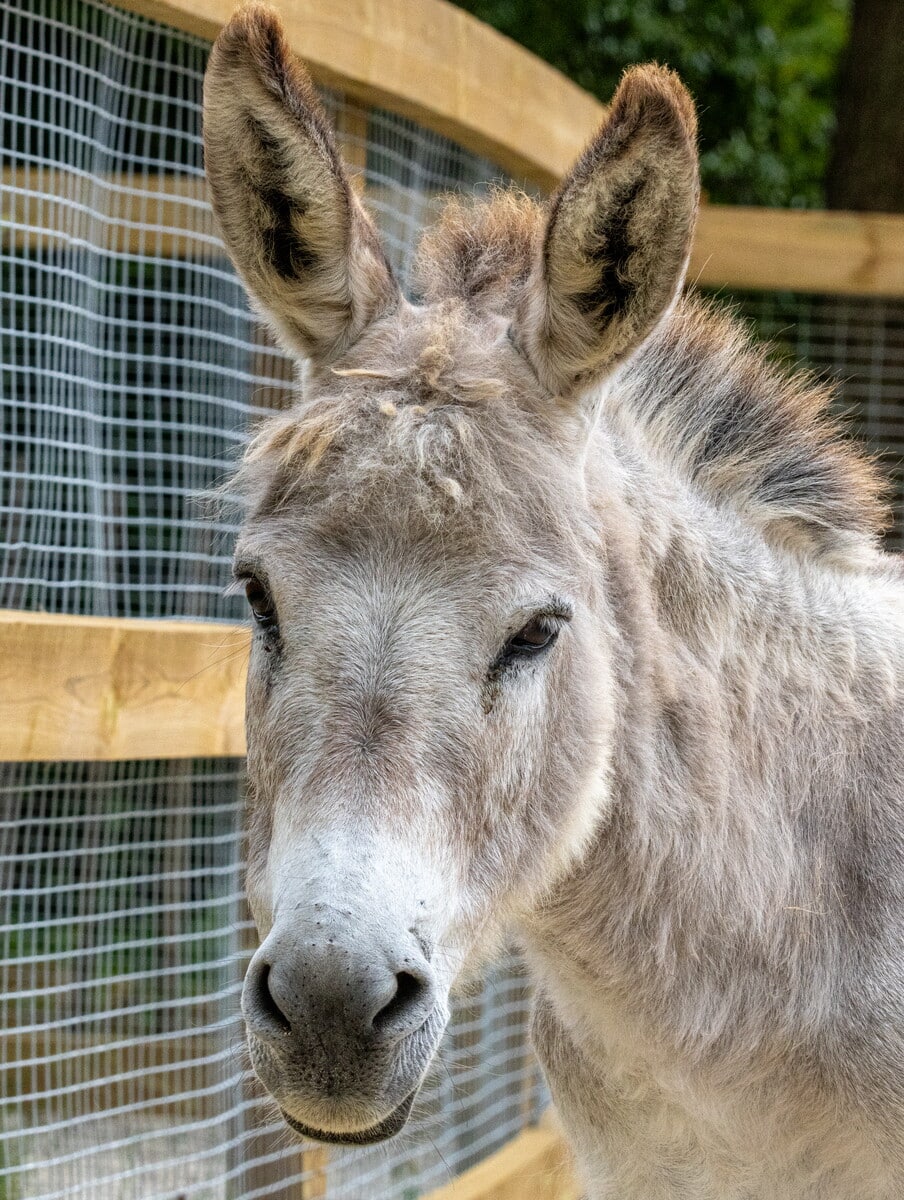
The two Sardinian donkeys come from the Bel Âne breeding farm in the Alpes-de-Haute-Provence, where they lived for 10 years. They are very close friends, no longer breed, and need less space than the younger donkeys.
The Sardinian donkey is characterized by its small size, gray coat, and cruciate stripe on its back. This Italian breed has traditionally been used for various agricultural tasks and transhumance. Its small size allows easy access to steep terrain. However, the population of this breed has significantly declined in recent times.
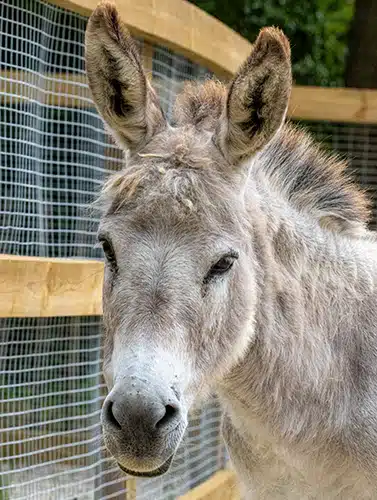
Quoquine was born in 2004 and is the smallest, measuring 80 cm at the withers. She has a more beige coat, and the ridge and St. Andrew’s cross on her back are more pronounced.
Lherminette was born in 1999 and has a more elongated head, a light coat, and a more pronounced fat pad on her neck.

The hens
All our hens come from the poultry farm in Saint-Georges in the Paris region and Ethoparc, in the Puy-de-Dôme.
Hens are very intelligent; they have a wide range of varied signals to communicate, for example, about external dangers. They are a social species that lives in small groups with many females and one or two roosters.
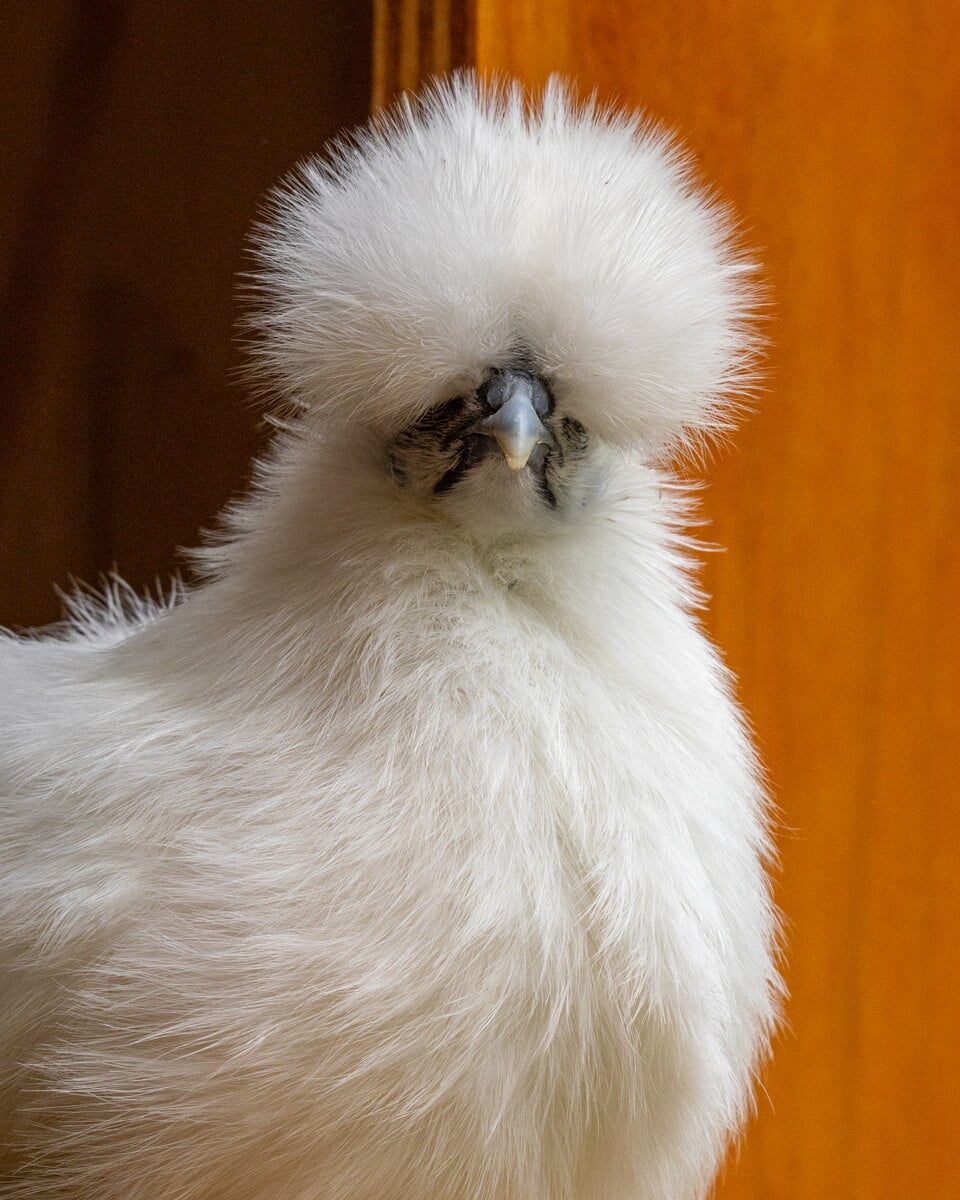
Rosalind, the Silkie chicken, is entirely white, with feathers that resemble down.
Pétunia-Perséphone, also known as Pépé, the Paduan chicken, is brown and black with a beautiful crest that falls over her eyes.
Simone, the Dutch crested hen, has a gray plumage and a white crest.
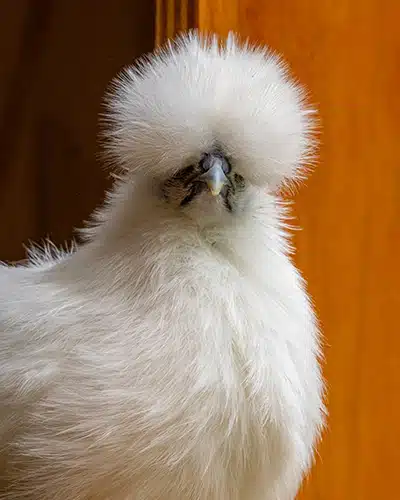
Rosalind

Pépé
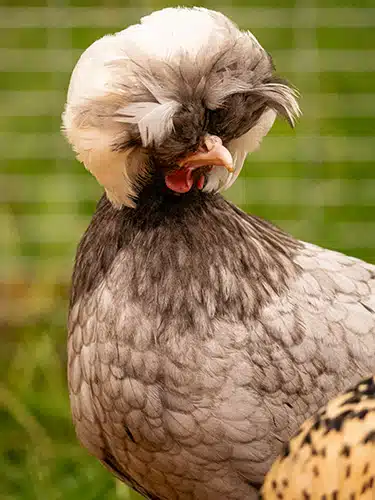
Simone
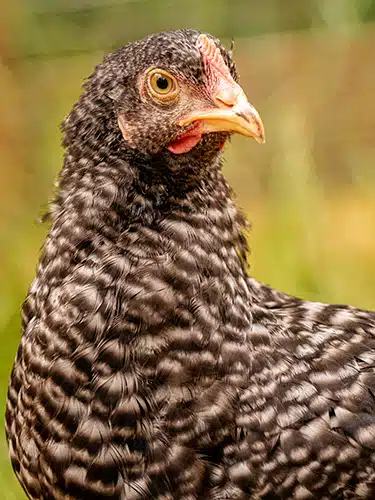
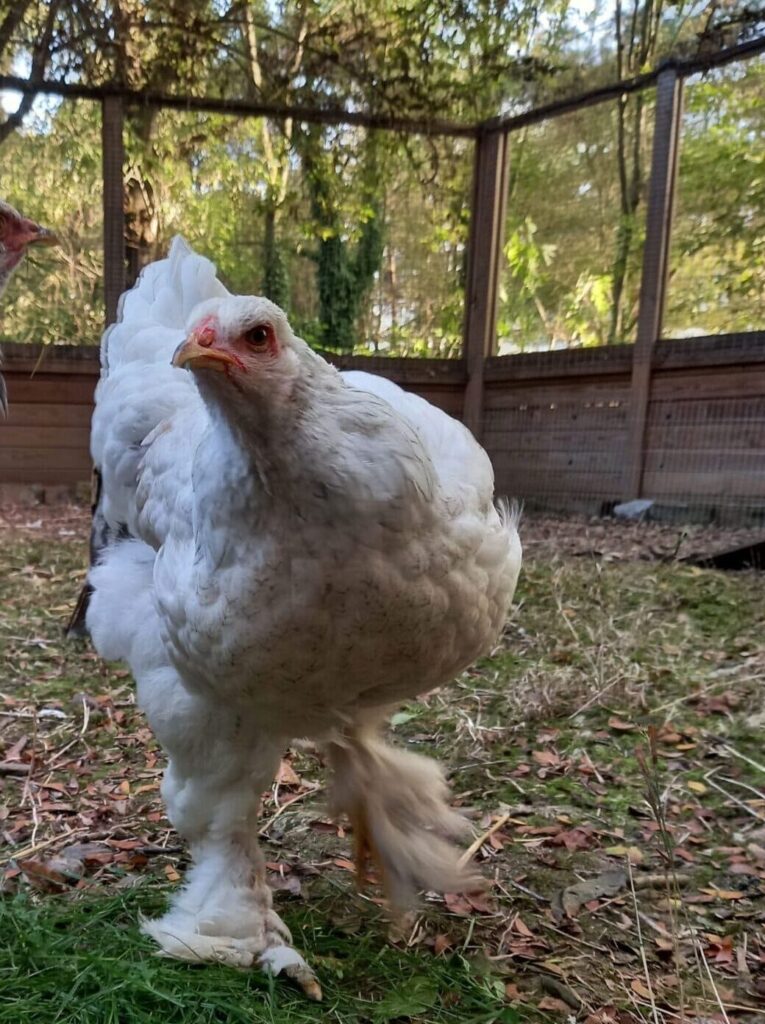
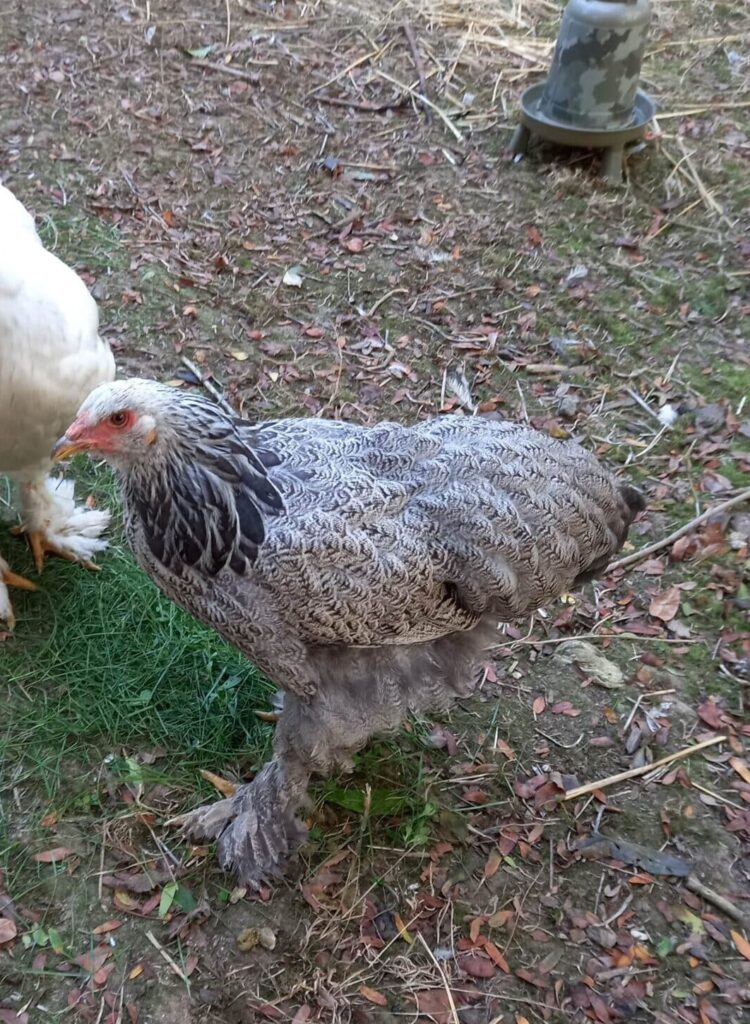
Georgette, the cuckoo gray hen, has yellow legs and a bluish-gray plumage reminiscent of the cuckoo pattern.
Jane has a white coat with red and black spots.
Karen has a silver partridge-laced plumage, characteristic of the Brahma breed.

The goats
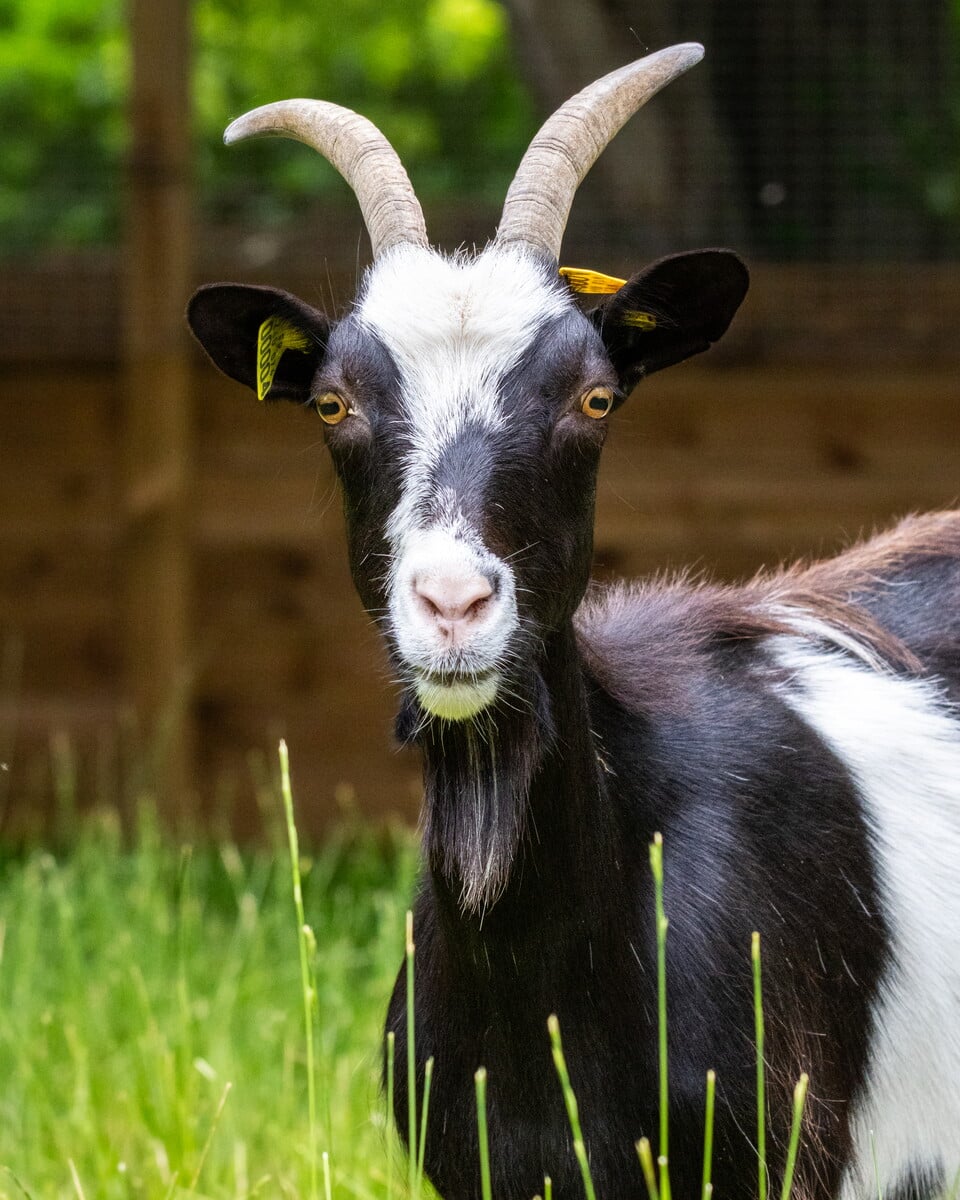
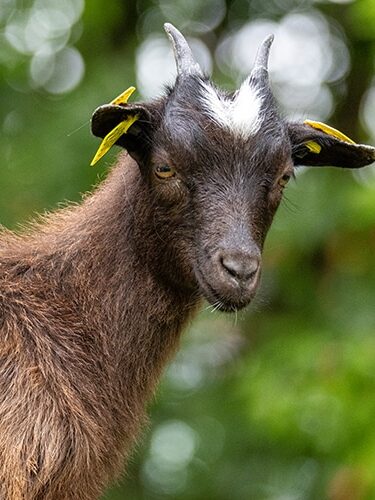
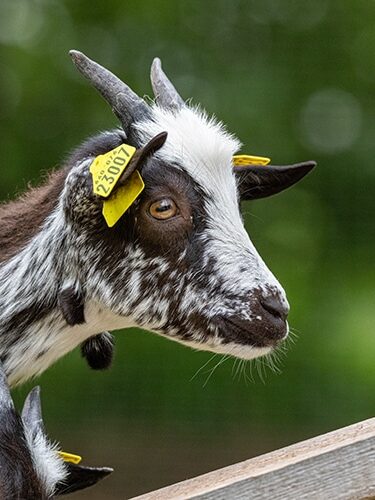
The goat is a mammal belonging to the bovid family, characterized by legs with two-toed hooves. Goats are recognizable by their horns and beard (barbichette). Often, you’ll notice two small balls of skin on their neck called wattles or pendants, which are skin outgrowths. Goats are social animals and cannot live alone. They have an exploratory temperament: they love to roam and search for food.
The Chèvre des Fossés, or “ditch goat,” was historically used for maintaining embankments and ditches, often tethered to a stake or supervised by children. It helped clean and maintain uncultivated areas. Traditionally raised for its milk, which was sometimes used to make cheese, this breed is docile and hardy. Today, it is being reintroduced for its milk production and its ability to clear vegetation through browsing.
At the farm, three generations of the same family live together.
Prune was born in 2019, with a completely brown coat and long hair. She is the grandmother.
Olive was born in 2020, with a brown coat and large white patches on her sides. She is Prune’s daughter and the mother of the young goats.
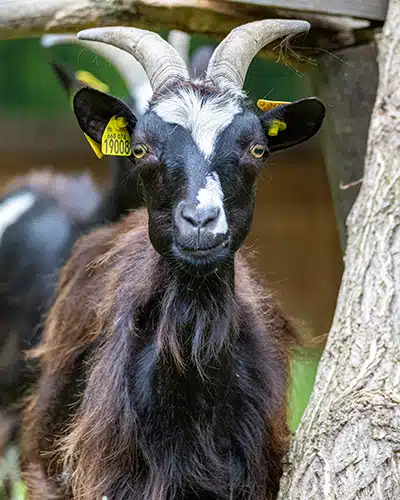
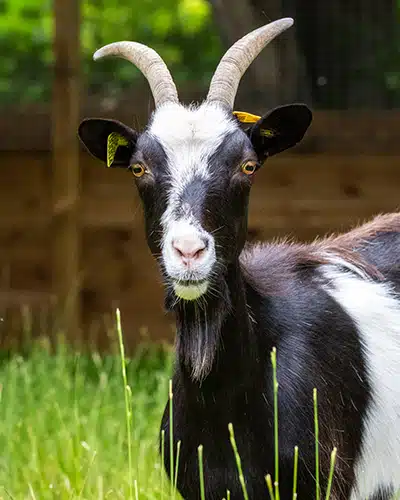
Ula and Utopie are twin sisters born on March 28, 2023.
Ula is brown and white. Utopie is white, gray, and brown.

The rabbits
The rabbit is a social animal but also territorial, living in family groups known as clans. Rabbits are naturally cautious because they are prey animals in the wild. If you hear them thumping the ground with their hind feet, it’s a signal to alert other rabbits in the clan that a predator or stranger is nearby.
The rabbit is herbivorous, not granivorous. Its digestive system allows it to thrive on a diet that is primarily fresh plants and dried forage. Rabbits are lagomorphs (not rodents); their teeth continuously grow. They need to eat hay almost constantly to keep their teeth worn down.
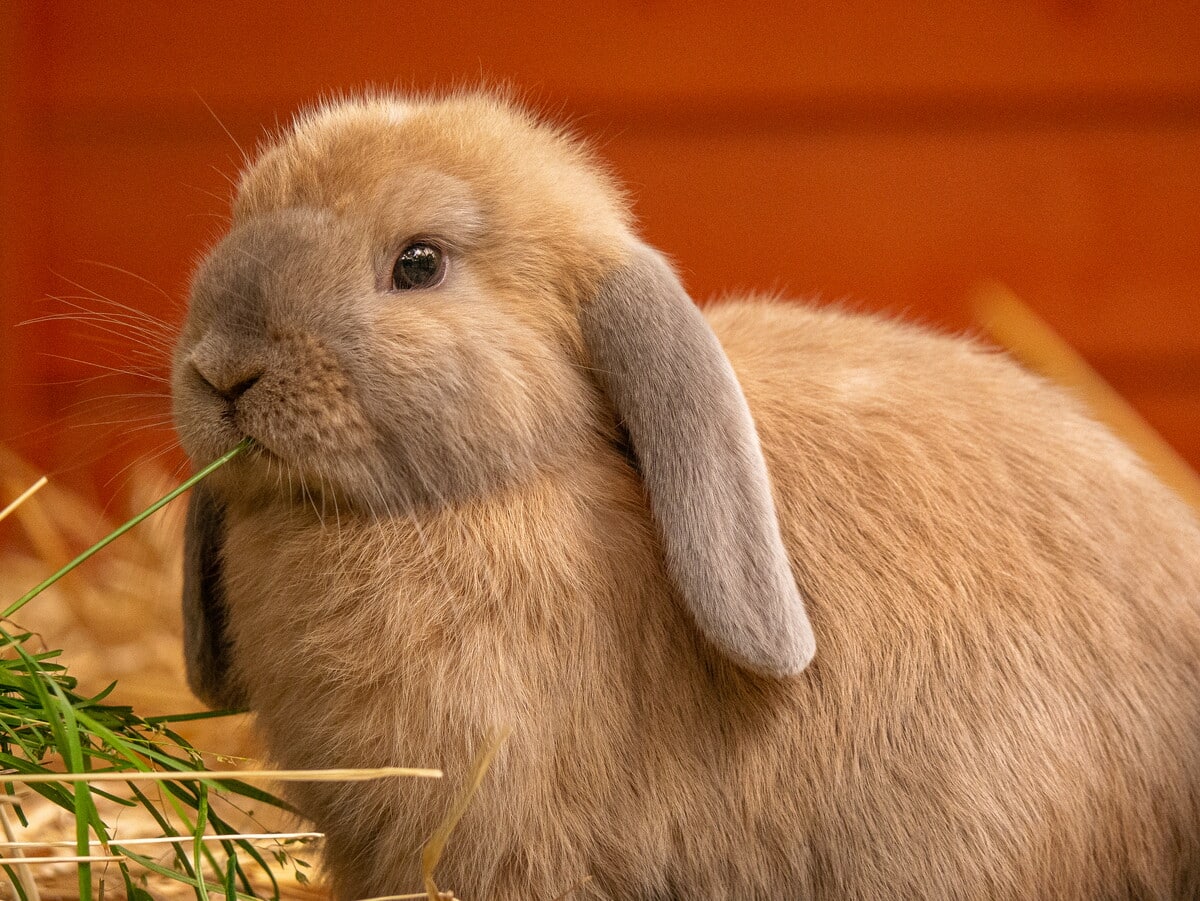
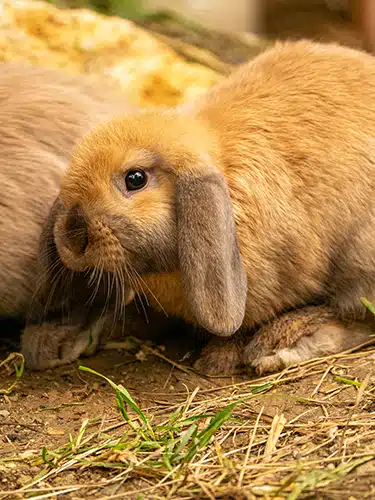
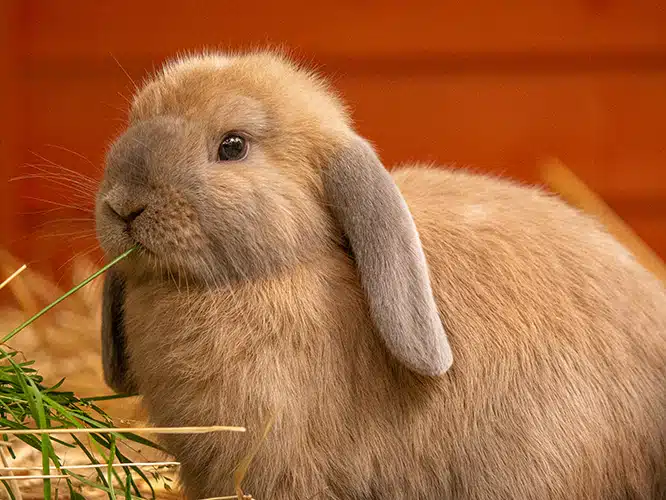
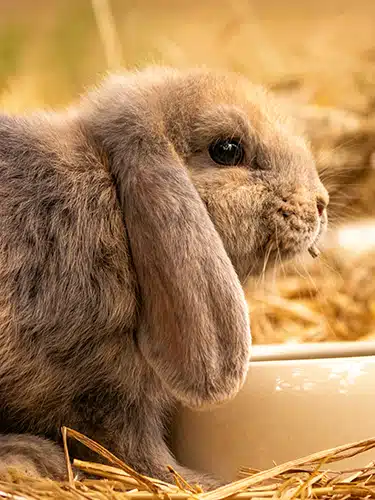
The dwarf lop rabbit is a miniature variety of domestic rabbit resulting from the crossbreeding of French lop rabbits and dwarf rabbits. Its characteristic feature is long drooping ears and a significantly reduced size compared to standard lop rabbits.
Jojo has a fawn-colored coat and is recognized by the dark spot on his nose.
Tango has an “Isabella” coat, being the lightest of the three brothers with a white spot on his back.
Indigo has a “Japanese blue” coat, marbled with brown and gray-blue.
Our three dwarf lop minilop rabbits are brothers born in March 2023. Their mother is a French dwarf lop and their father is a minilop. They come from an educational farm that specializes in animal therapy.
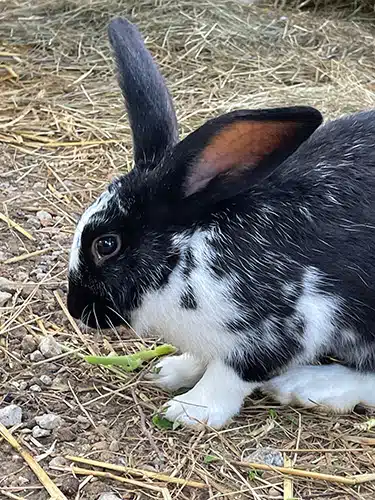
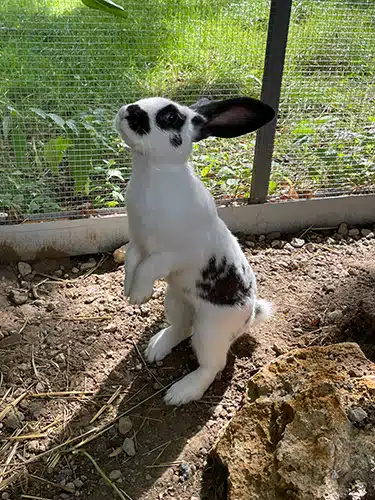
Our two Checkered Giant rabbits are brothers born in May 2023. They also come from an educational farm in Normandy. They have never been very timid and started seeking attention as soon as they arrived at the farm.
Goliath is black with white patches on the head, legs, and belly.
Melchior is white with black patches on the body and head. His ears are black.