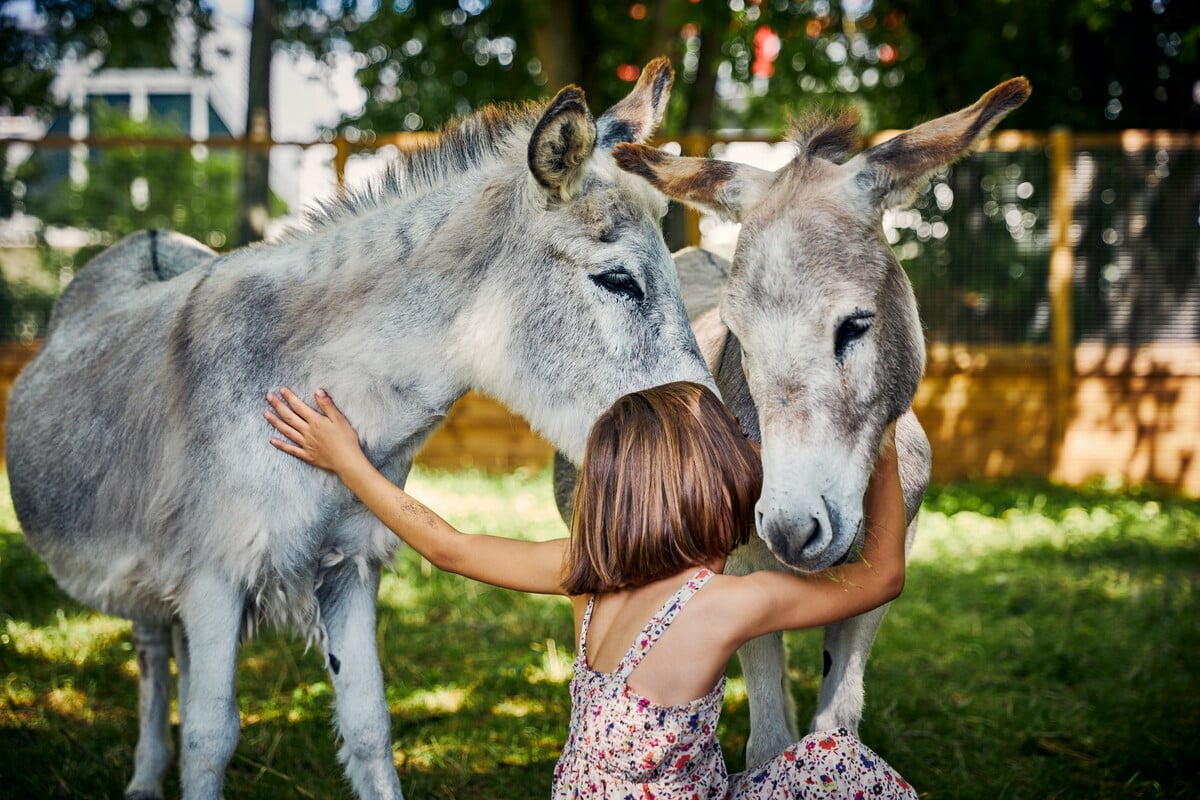

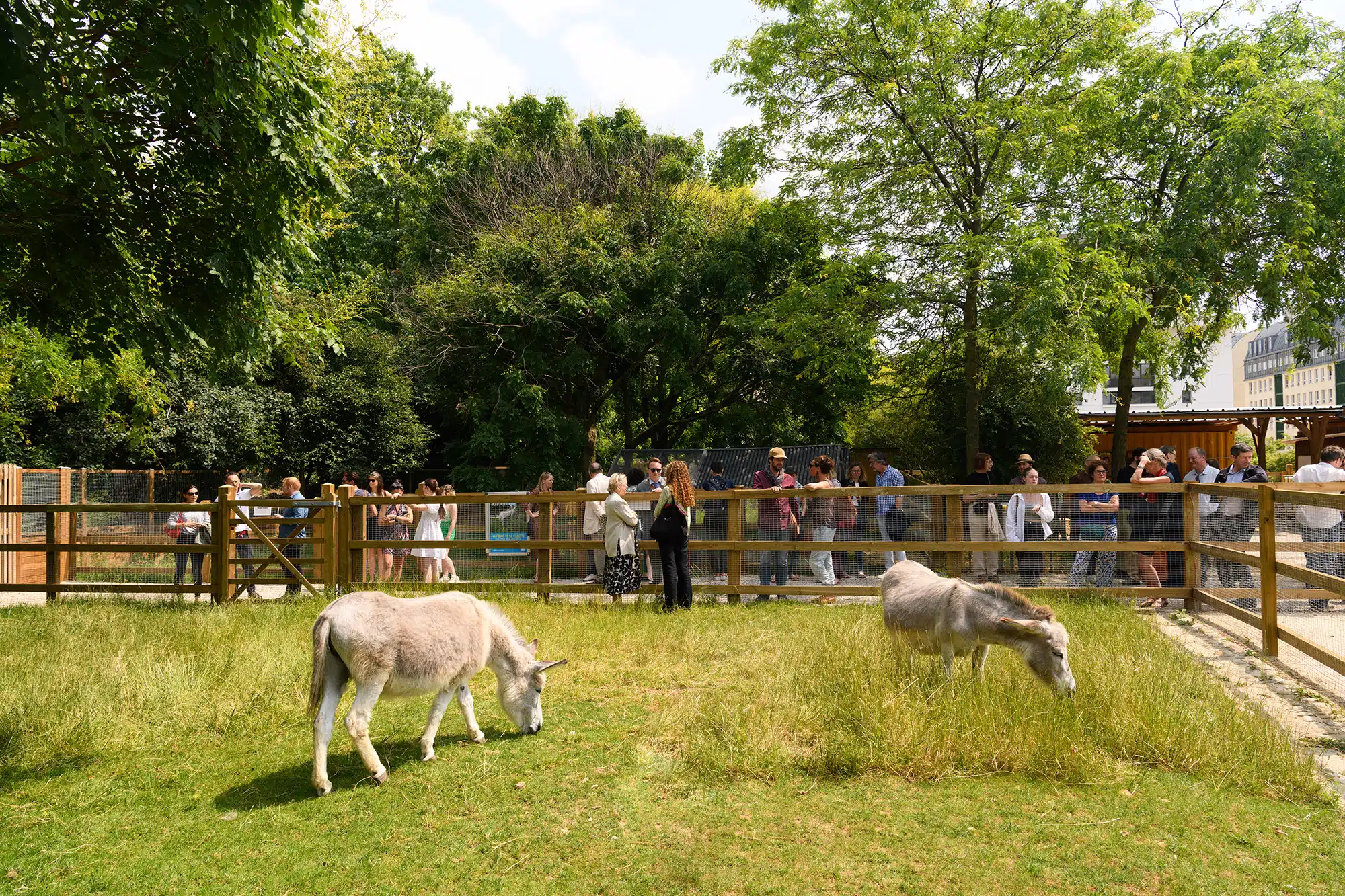
Meet donkeys, chickens, sheep, goats, and rabbits at the educational farm, a special place for discovery that helps strengthen the bond with animals. Like in the Jardins Passagers, workshops are offered to meet the farm animals, learn about their way of life, and take part in their care. Quoquine, our grandmother donkey who has come to Paris to enjoy her retirement, is waiting for you — hoof at the ready!
The donkeys
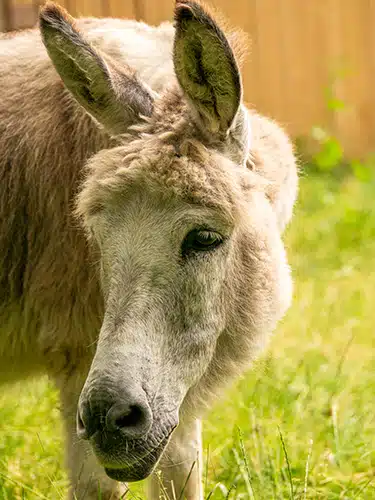
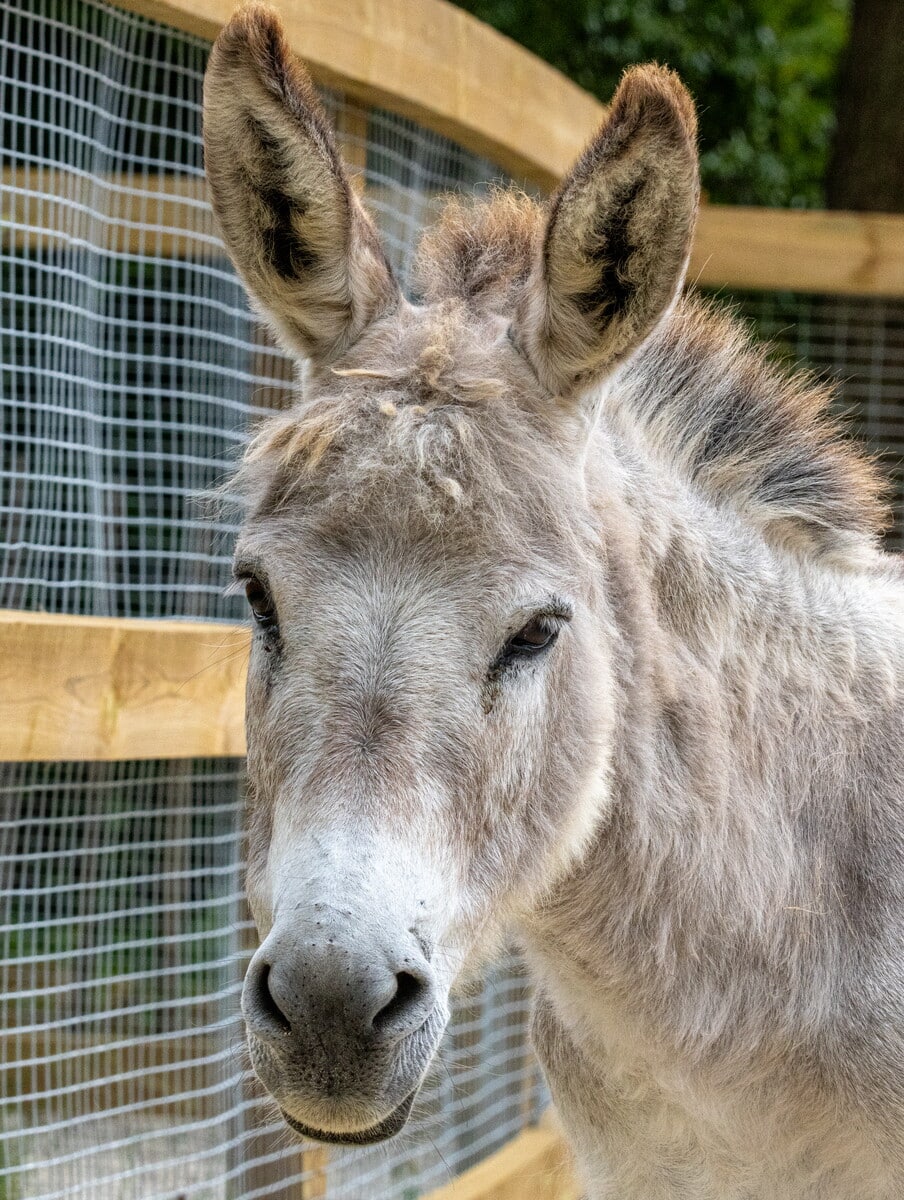
Quoquine, Andine and her son Quincy are our three Sardinian donkeys. Quoquine previously lived with Lerminette, a female donkey to whom she was very close. Sadly, Lerminette recently passed away. Andine and Quincy have since joined us and are gradually settling in with Quoquine.
The Sardinian donkey is characterised by its small size, grey coat and dorsal stripe. This Italian breed was traditionally used for agricultural work and transhumance. Its small size allows it to move easily through steep and rugged terrain. Today, the breed’s population has become very small.
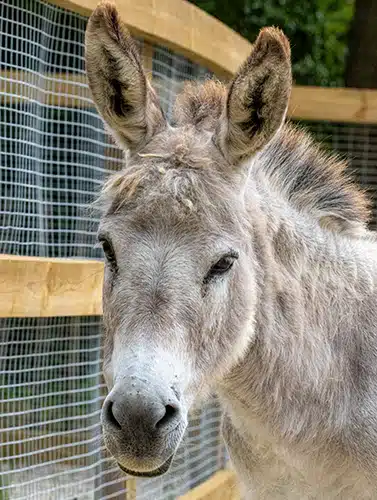
Quoquine was born in 2004 and is the smallest, measuring 80 cm at the withers. She has a more beige coat, and the ridge and St. Andrew’s cross on her back are more pronounced.
After a long illness, Lerminette passed away during the night of June 15–16, 2026, just short of her 30th birthday.
Lerminette was born in 1999 and has a more elongated head, a light coat, and a more pronounced fat pad on her neck.
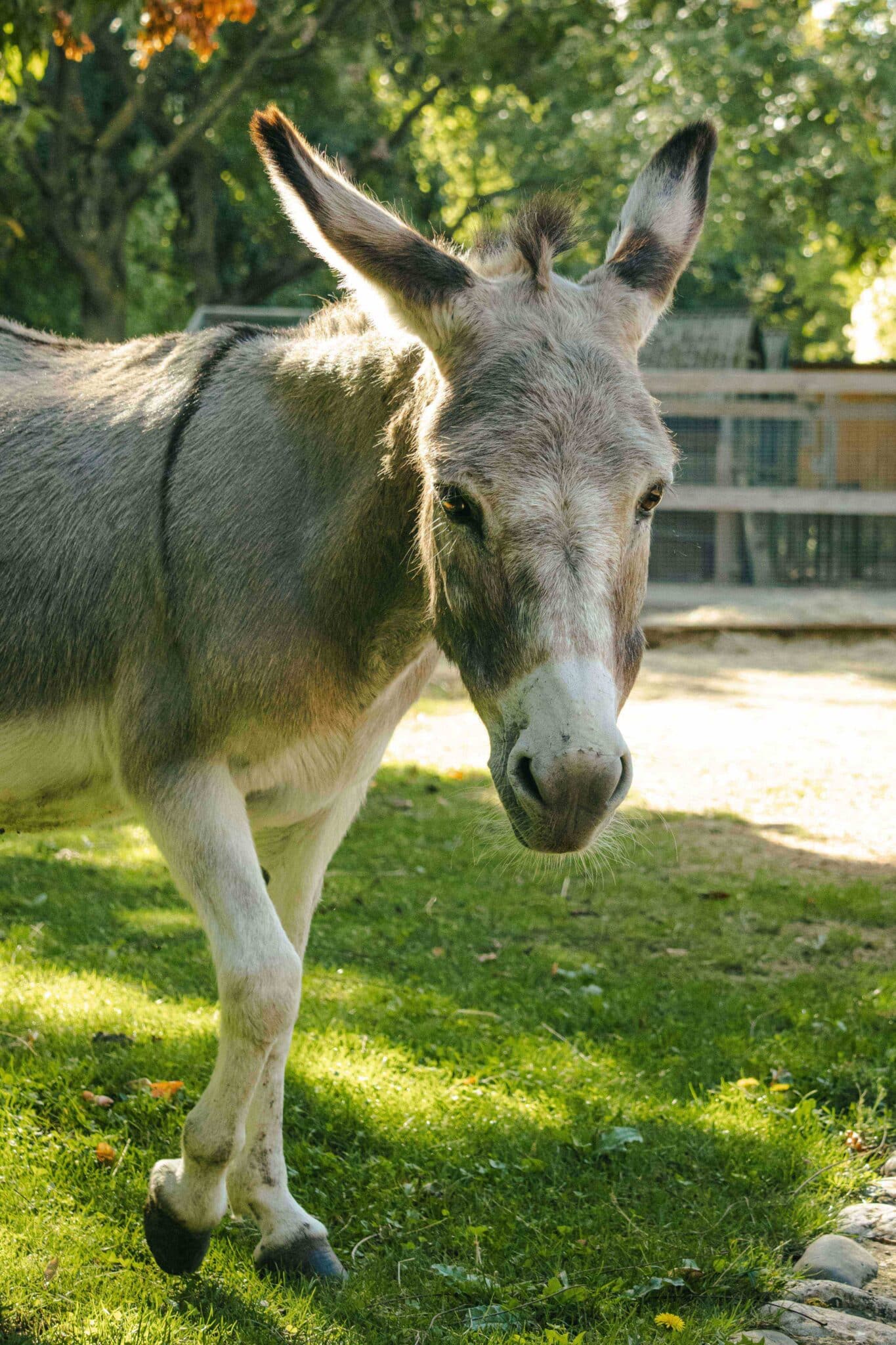
Andine (born in 2010) is Quincy’s mother. She has a darker coat and a black mane. The Saint Andrew’s cross on her back is more pronounced.
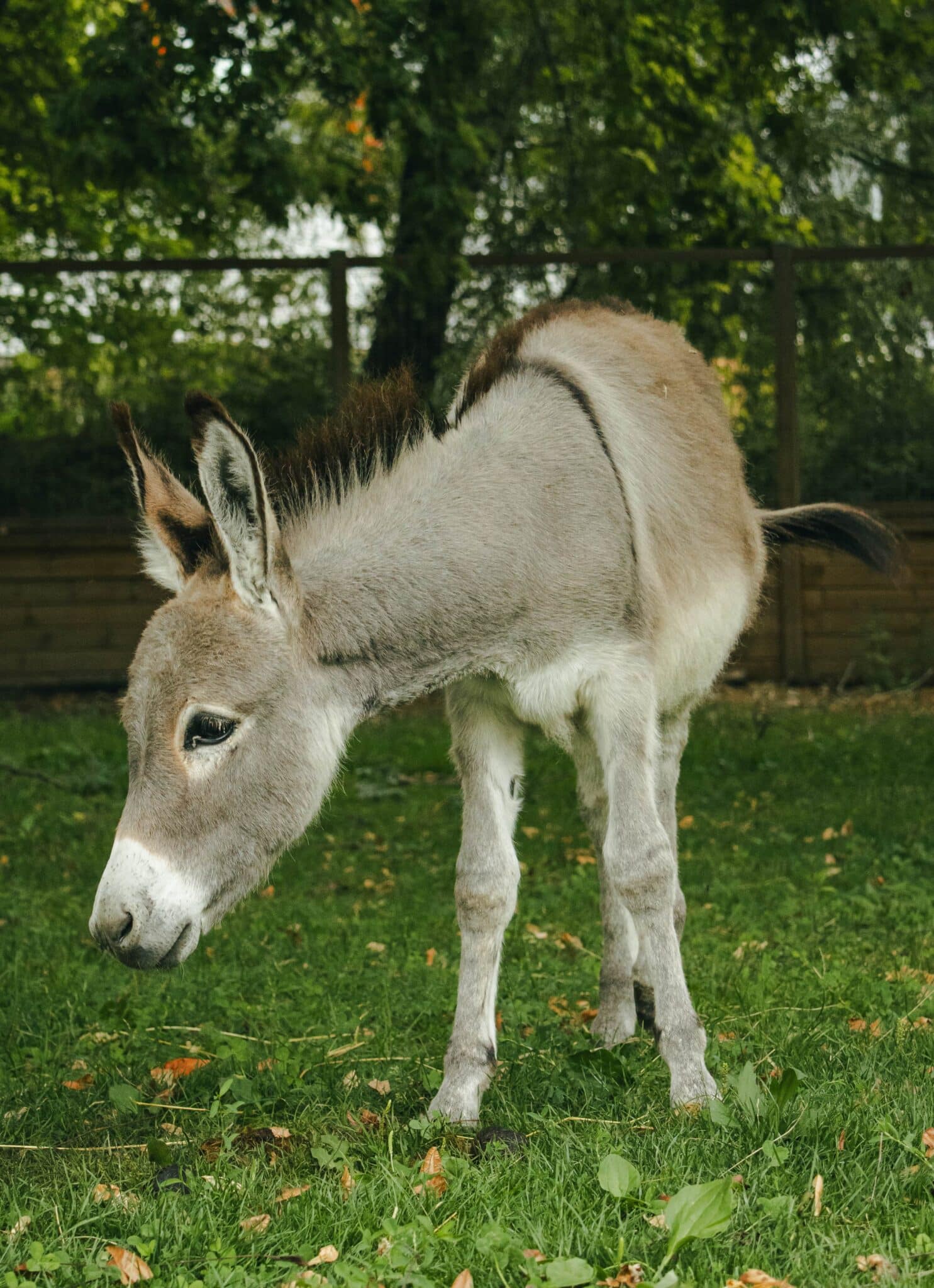
Quincy (born in 2026) is Andine’s son. He is a curious and playful young donkey.

The hens and the rooster
All our hens come from the poultry farm in Saint-Georges in the Paris region and Ethoparc, in the Puy-de-Dôme.
Hens are very intelligent; they have a wide range of varied signals to communicate, for example, about external dangers. They are a social species that lives in small groups with many females and one or two roosters.
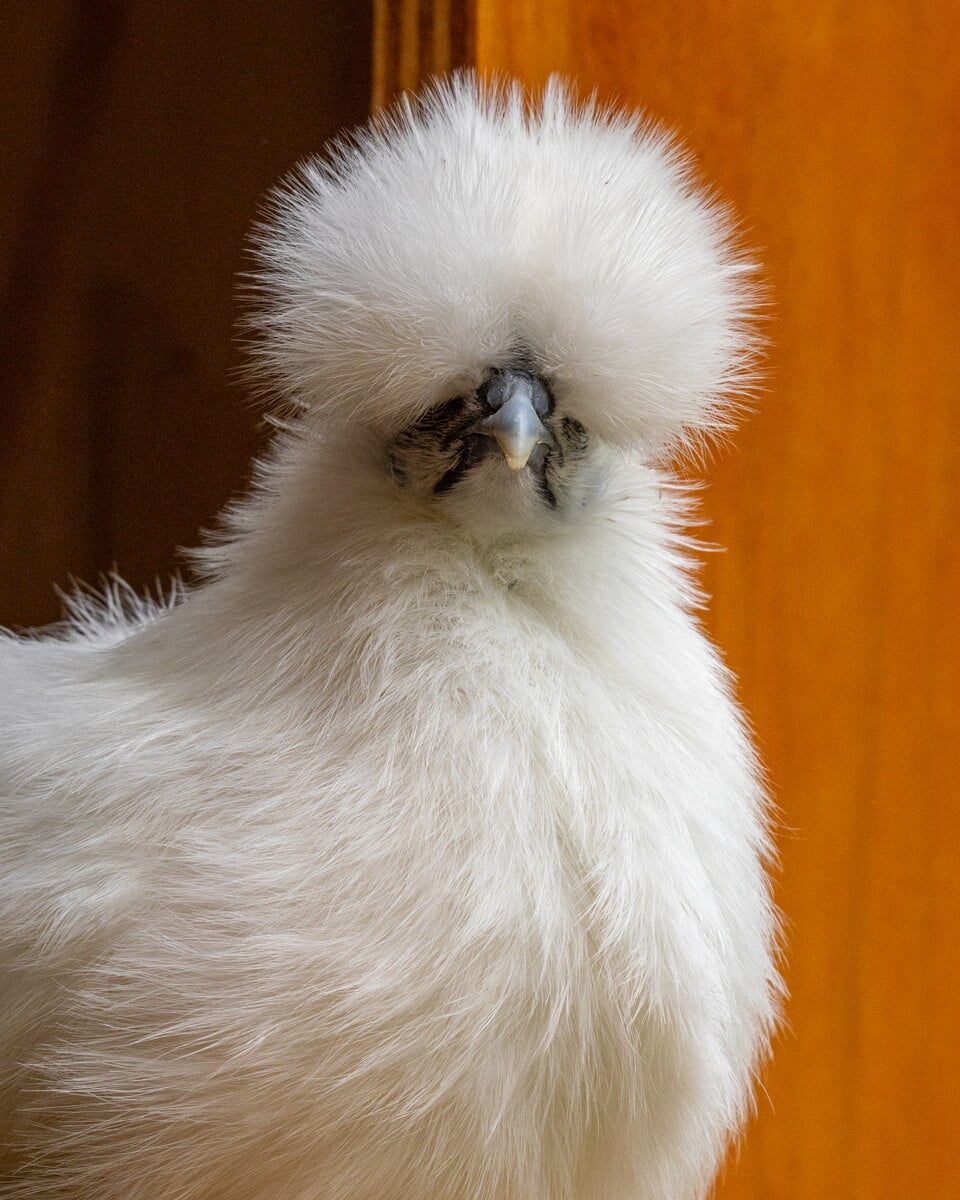
Rosalind, the Silkie chicken, is entirely white, with feathers that resemble down.
Pétunia-Perséphone, also known as Pépé, the Paduan chicken, is brown and black with a beautiful crest that falls over her eyes.
Simone, the Dutch crested hen, has a gray plumage and a white crest.
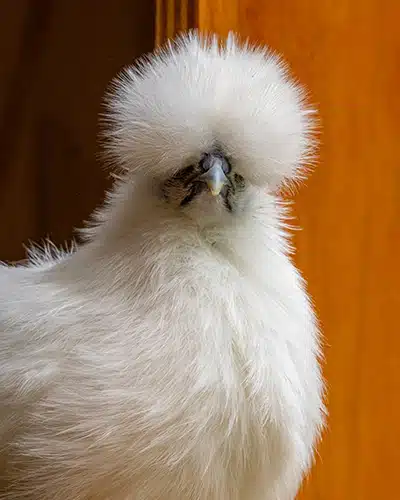
Rosalind

Pépé
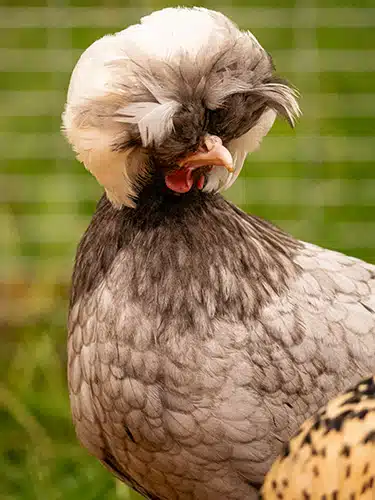
Simone
Georgette, the cuckoo gray hen, has yellow legs and a bluish-gray plumage reminiscent of the cuckoo pattern.
Jane has a white coat with red and black spots.
Karen has a silver partridge-laced plumage, characteristic of the Brahma breed.
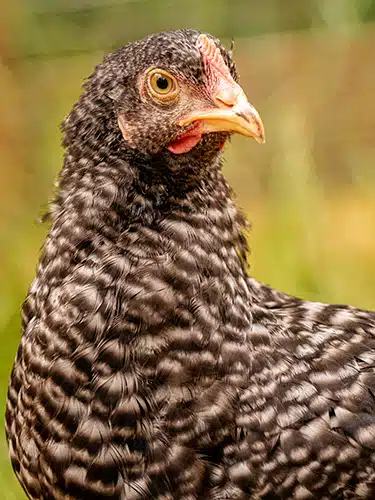
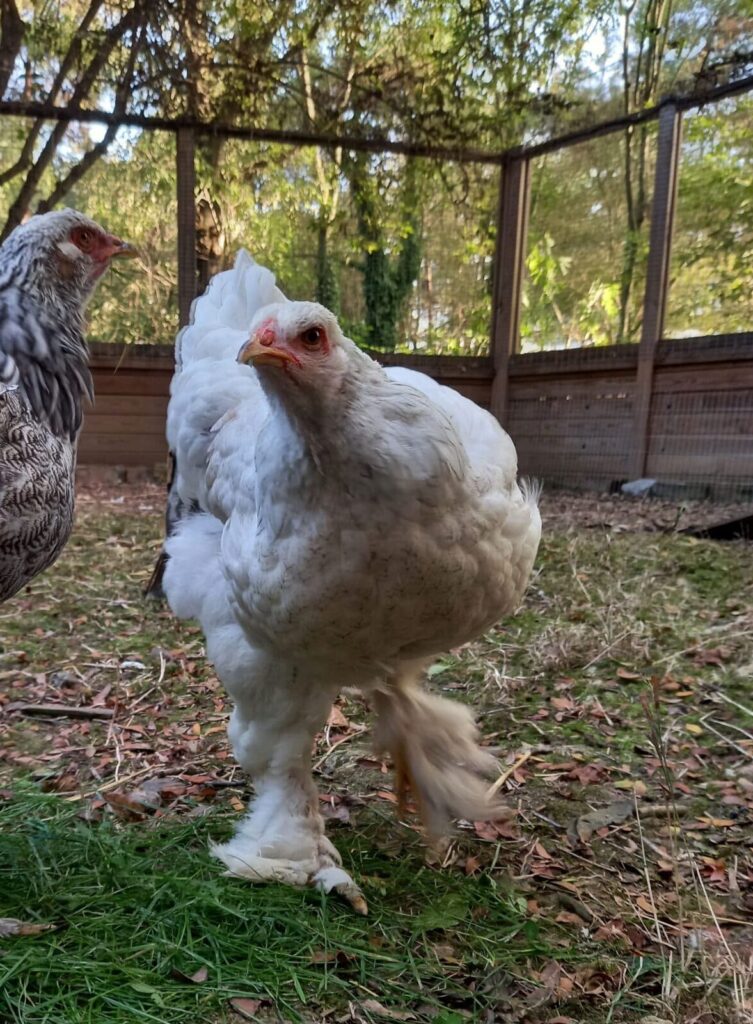
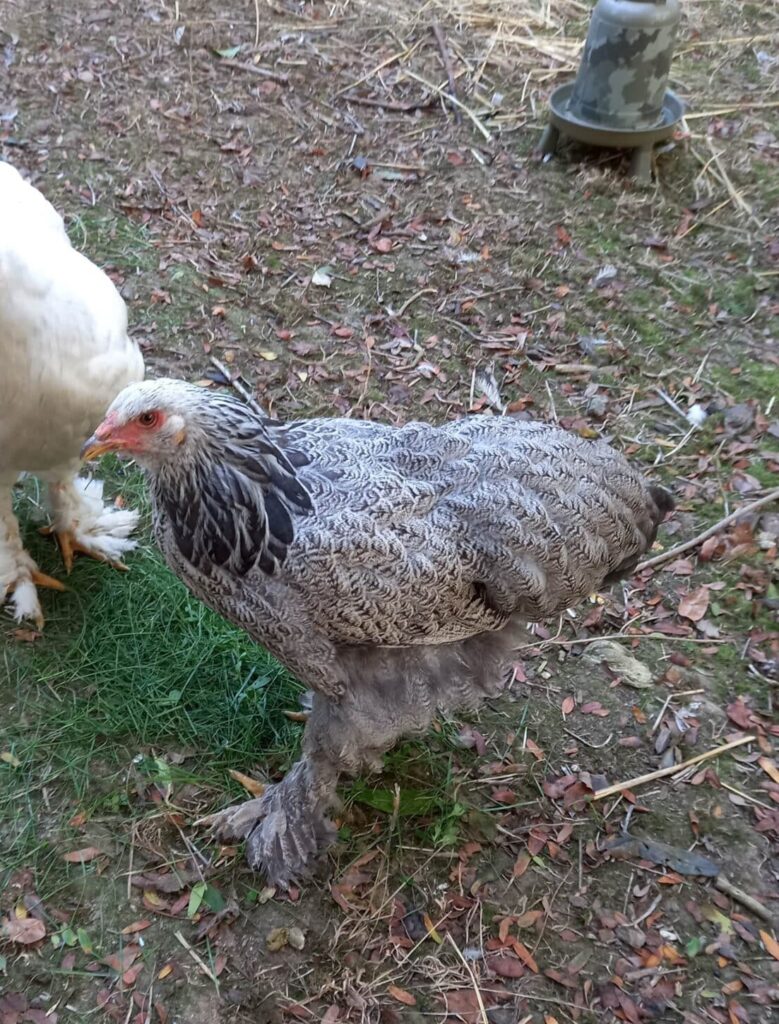
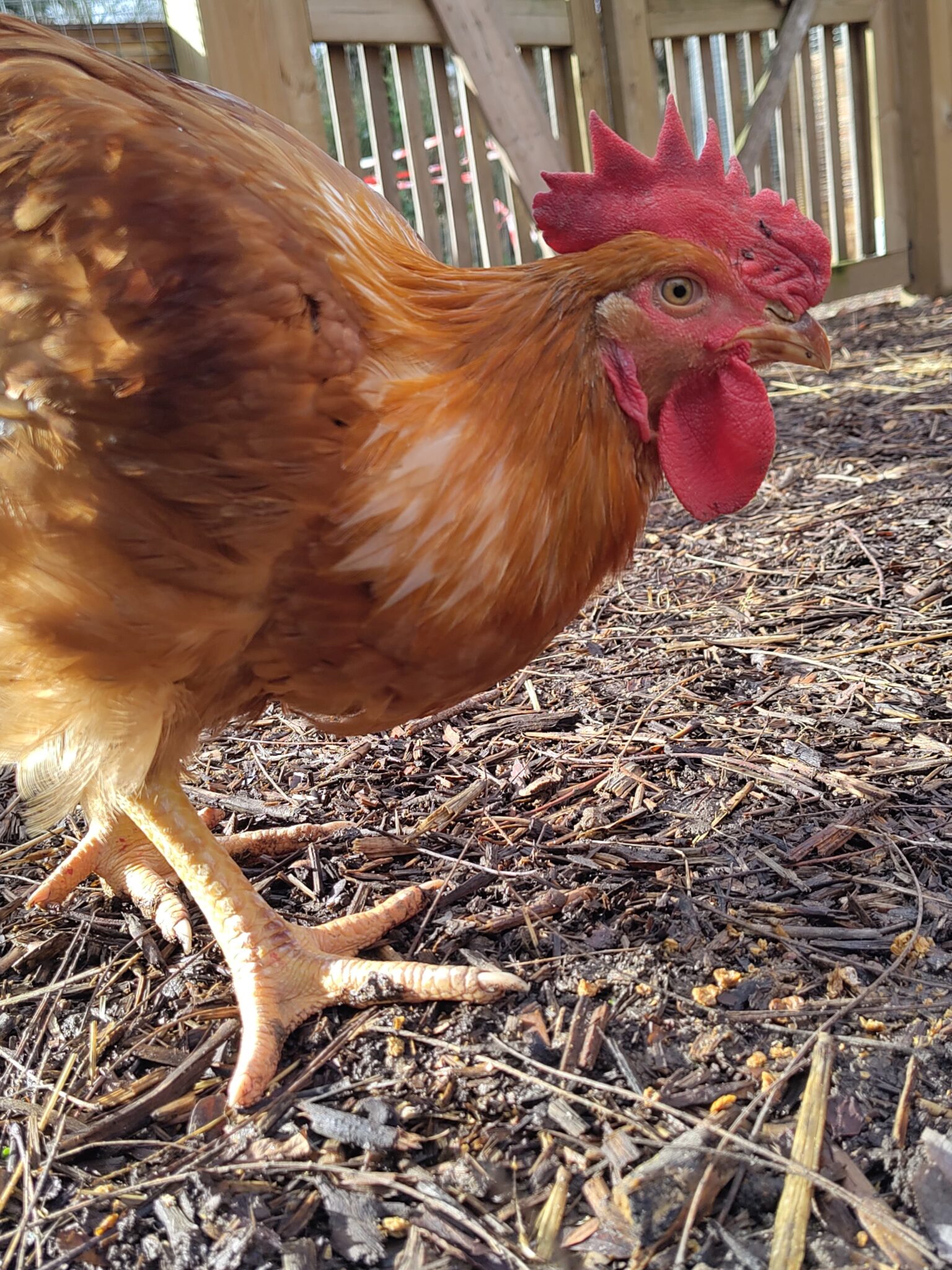
Pedro has a reddish coat with white spots.

The goats
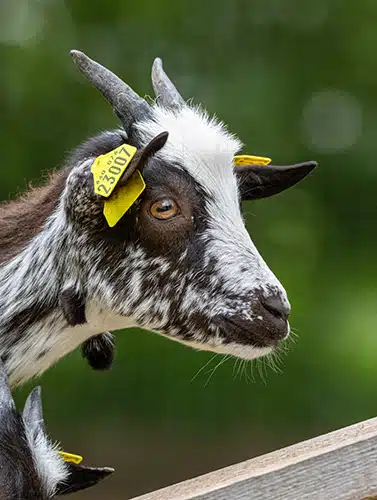
The goat is a mammal belonging to the bovid family, characterized by legs with two-toed hooves. Goats are recognizable by their horns and beard (barbichette). Often, you’ll notice two small balls of skin on their neck called wattles or pendants, which are skin outgrowths. Goats are social animals and cannot live alone. They have an exploratory temperament: they love to roam and search for food.
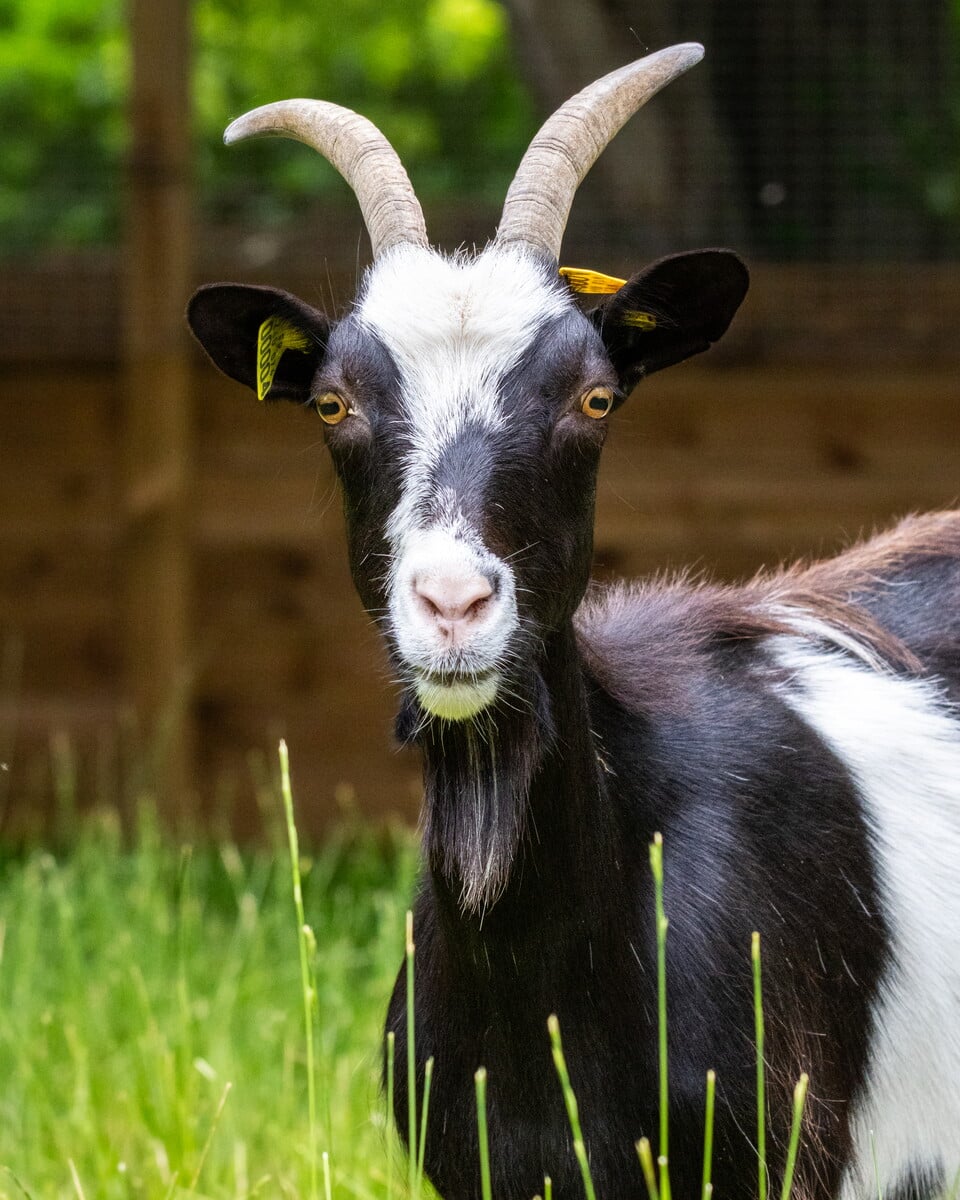
The chèvre des Fossés, or “ditch goat,” was historically used for maintaining embankments and ditches, often tethered to a stake or supervised by children. It helped clean and maintain uncultivated areas. Traditionally raised for its milk, which was sometimes used to make cheese, this breed is docile and hardy. Today, it is being reintroduced for its milk production and its ability to clear vegetation through browsing.
At the farm, three generations of the same family live together.
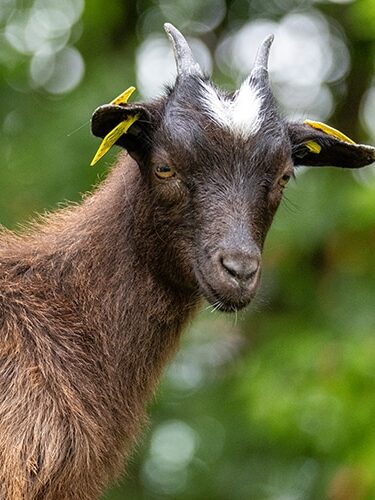
Prune was born in 2019, with a completely brown coat and long hair. She is the grandmother.
Olive was born in 2020, with a brown coat and large white patches on her sides. She is Prune’s daughter and the mother of the young goats.
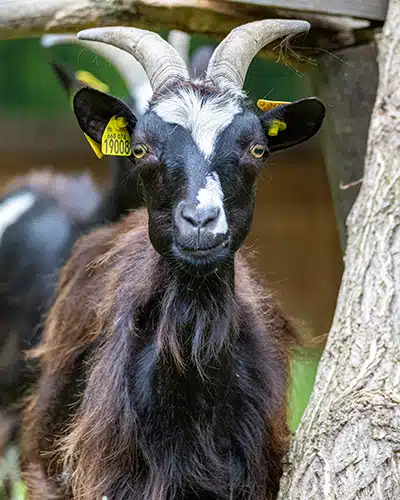
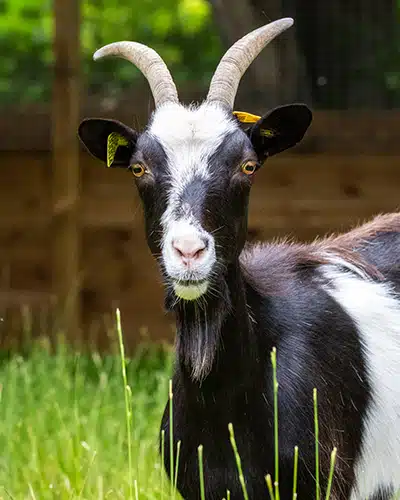
Ula and Utopie are twin sisters born on March 28, 2023.
Ula is brown and white. Utopie is white, gray, and brown.

The sheep
The Landes de Bretagne sheep is a hardy French breed that was once on the verge of extinction before being rediscovered in the Brière region in the 1980s. Highly sociable, sheep live in flocks and do not cope well with being isolated. At the Farm, it is female sheep, known as ewes, that live together.
A sheep’s wool protects it from the cold and rain thanks to its structure and to suint, a natural layer of grease that coats the wool. Today, there are around 4,000 sheep of this breed. Sheep also have an excellent memory and can recognise up to 50 other sheep, as well as humans.
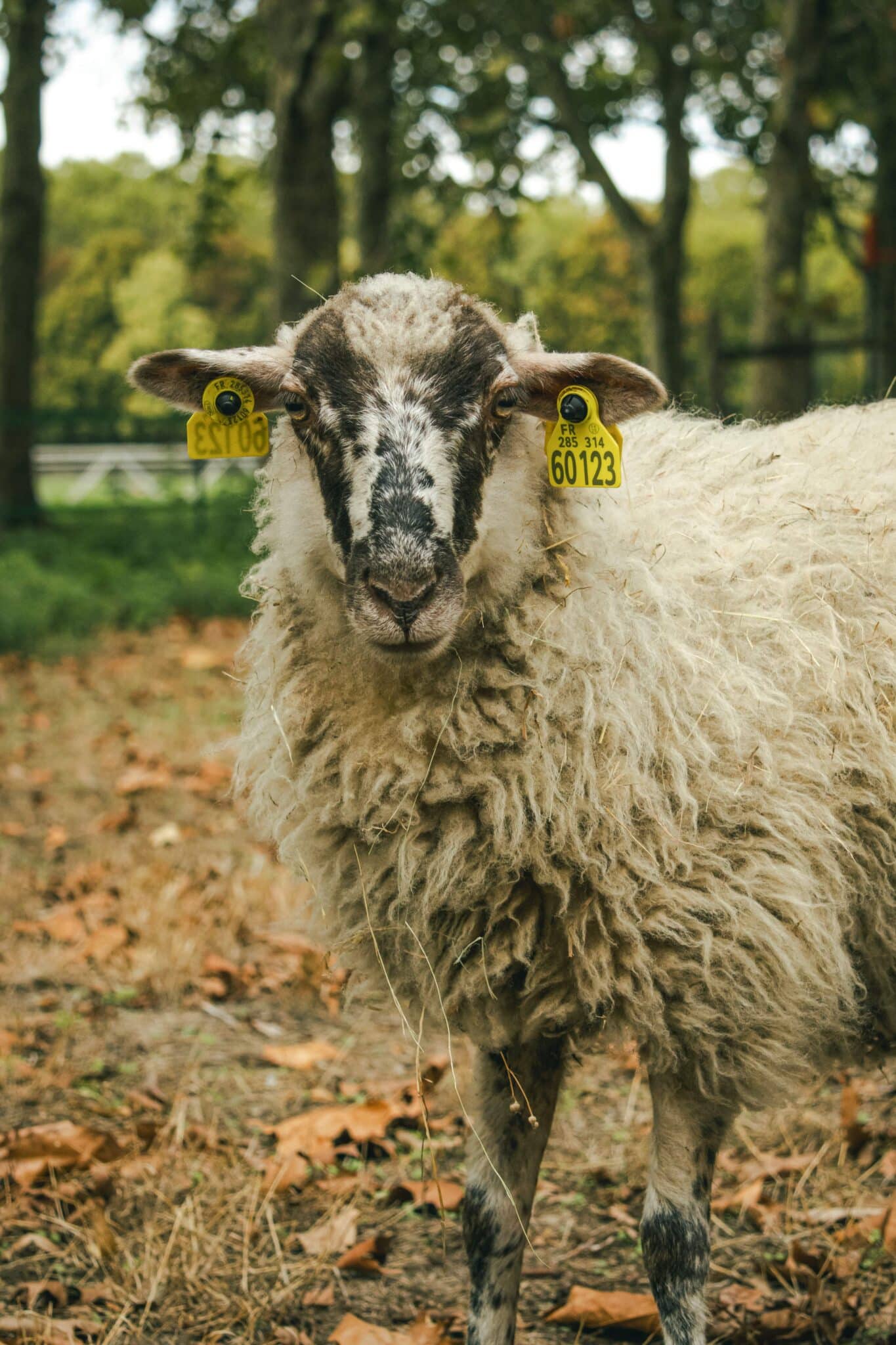
Bulma (ear tag 60123, born in 2026), the most sociable of the group, with large black patches on her head.
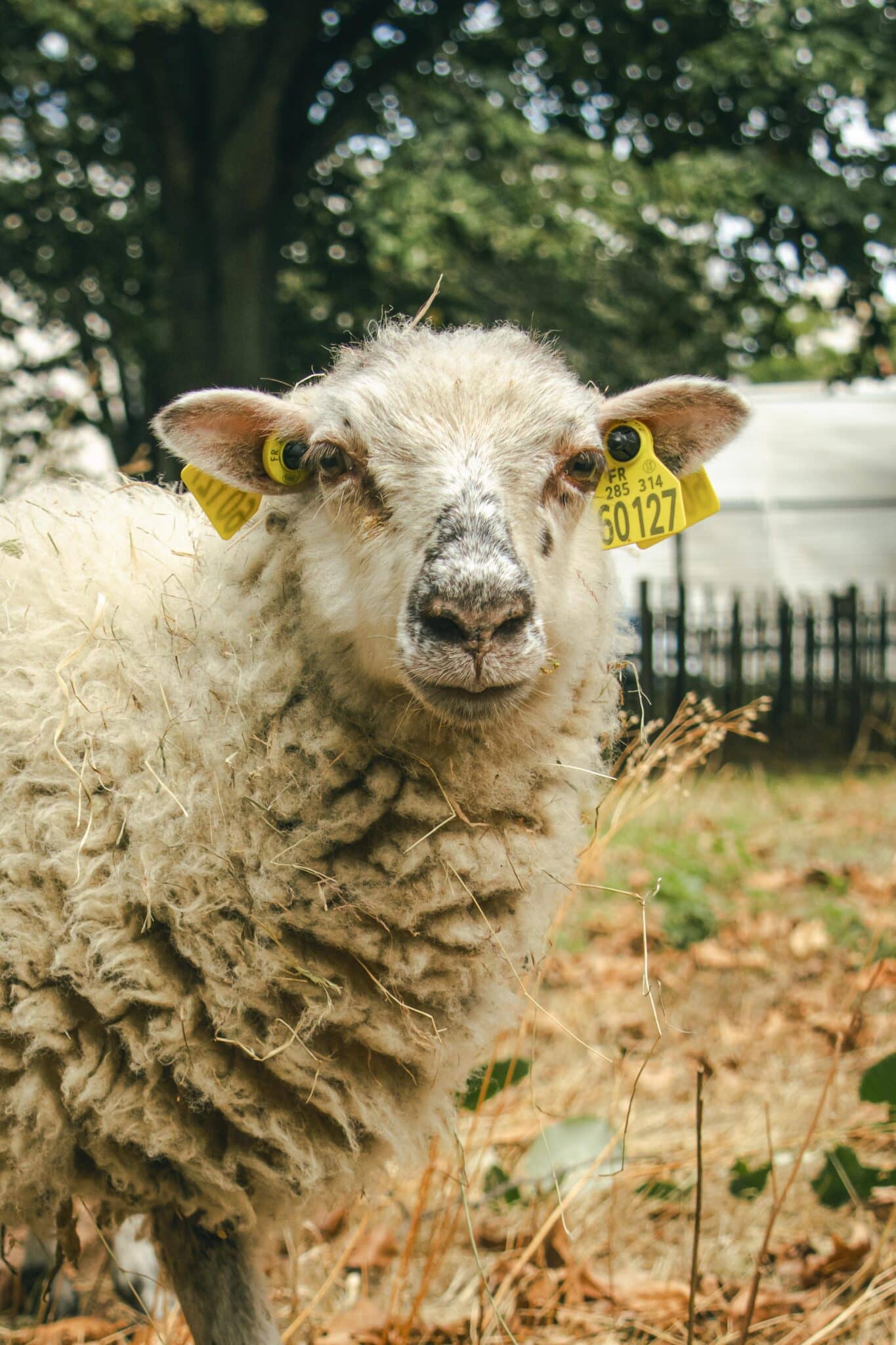
Brume (ear tag 60127, born in 2026), the shyest of the group, with distinctive black markings on her knees and a black muzzle.
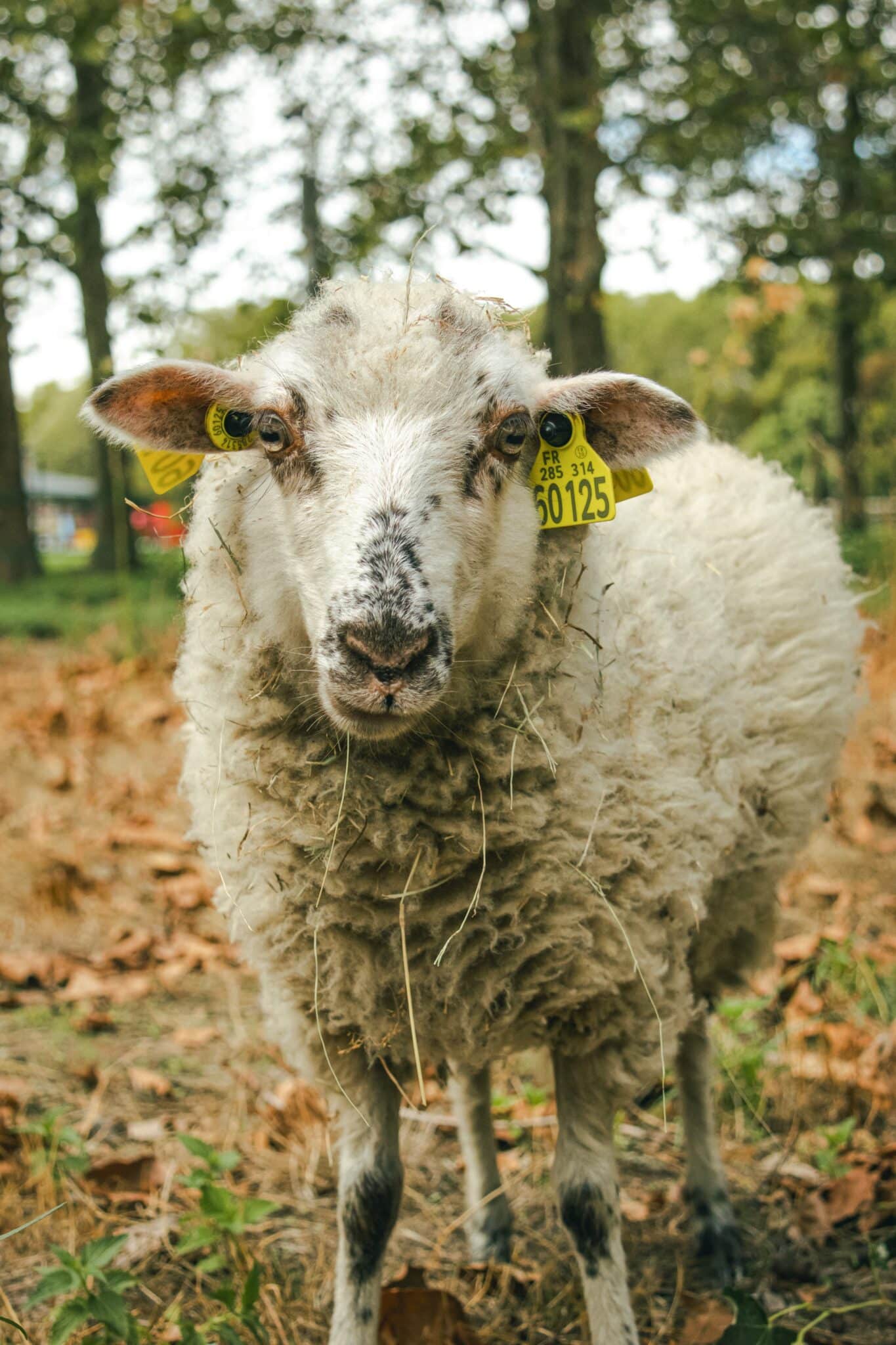
Belote (ear tag 60125, born in 2026), the smallest of the group, with a spotted nose. She is often seen with Bulma.

The rabbits
The rabbit is a social animal but also territorial, living in family groups known as clans. Rabbits are naturally cautious because they are prey animals in the wild. If you hear them thumping the ground with their hind feet, it’s a signal to alert other rabbits in the clan that a predator or stranger is nearby.
The rabbit is herbivorous, not granivorous. Its digestive system allows it to thrive on a diet that is primarily fresh plants and dried forage. Rabbits are lagomorphs (not rodents); their teeth continuously grow. They need to eat hay almost constantly to keep their teeth worn down.
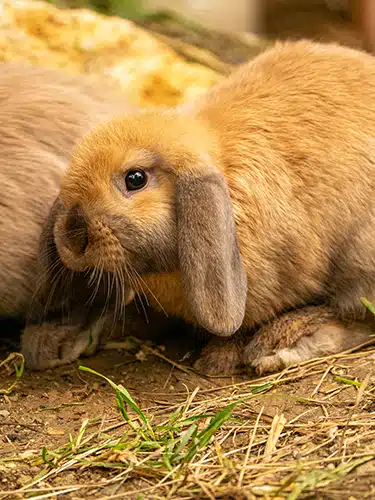
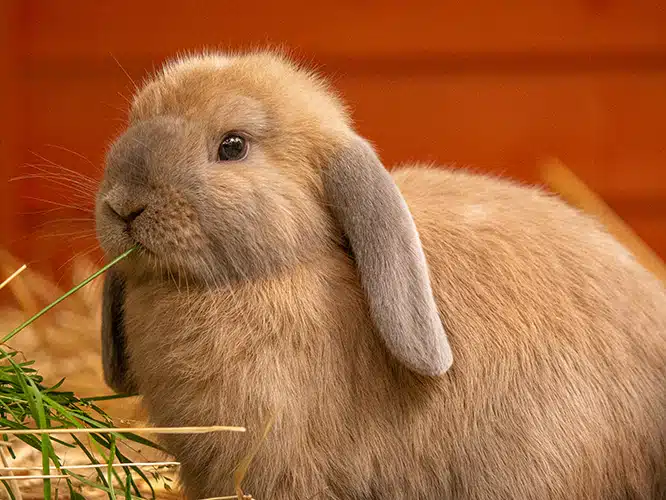
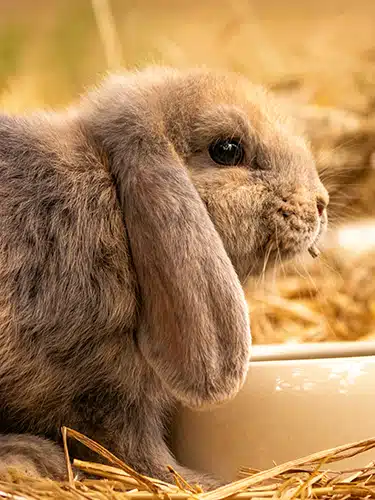
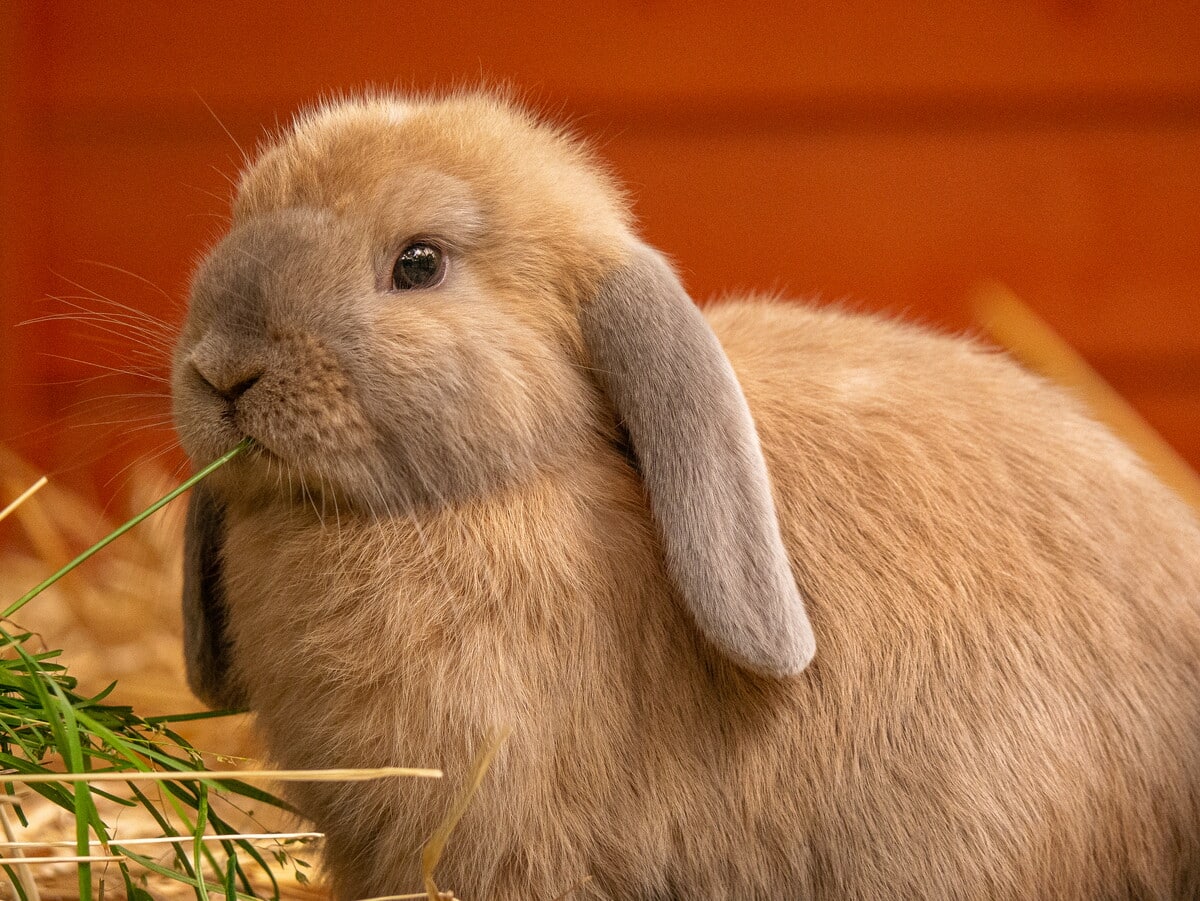
The dwarf lop rabbit is a miniature variety of domestic rabbit resulting from the crossbreeding of French lop rabbits and dwarf rabbits. Its characteristic feature is long drooping ears and a significantly reduced size compared to standard lop rabbits.
The minilop is the Anglo-Saxon version of the dwarf lop rabbit. It was bred to have a rounder head and body, as well as shorter ears. Our dwarf rabbits are a cross between the French dwarf lop and the English minilop breed.
Jojo has a fawn-colored coat and is recognized by the dark spot on his nose.
Tango has an “Isabella” coat, being the lightest of the three brothers with a white spot on his back.
Indigo has a “Japanese blue” coat, marbled with brown and gray-blue.
Our three dwarf lop minilop rabbits are brothers born in March 2023. Their mother is a French dwarf lop and their father is a minilop. They come from an educational farm that specializes in animal therapy.
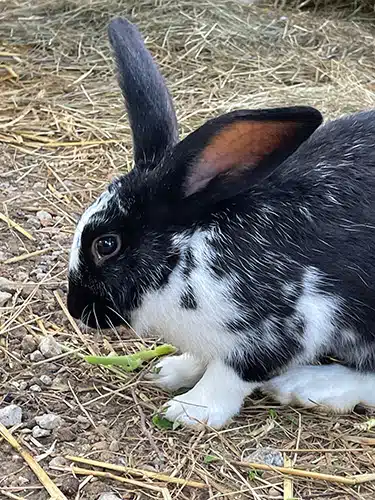
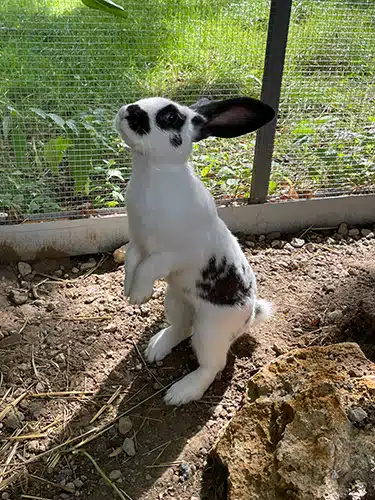
Our two Checkered Giant rabbits are brothers born in May 2023. They also come from an educational farm in Normandy. They have never been very timid and started seeking attention as soon as they arrived at the farm.
Goliath is black with white patches on the head, legs, and belly.
Melchior is white with black patches on the body and head. His ears are black.
Discover La Ferme de la Villette!
Almost 40 years after its inauguration, Europe’s largest urban cultural park, designed by Bernard Tschumi in the north of Paris, continues to evolve. By offering the public a new space for shared nature, tranquility, and observation, La Villette continues its commitment to biodiversity conservation and animal welfare.